

The New Game Masters: World Leaders Shaping the Future of Gaming
How gaming became the world’s most exciting laboratory for technology, creativity, and human connection
Gaming is no longer just entertainment — it is becoming one of the most powerful innovation engines of the future.
There was a time when gaming was seen as a hobby: something people did after school, after work, or on the weekend with friends. Today, that idea feels almost ancient.
Gaming is now a global culture, a creative economy, a technology test lab, a social network, a competitive sport, and a billion-dollar business all at once. It is where artificial intelligence meets storytelling, where virtual worlds become real communities, and where the next generation of consumers spends time, money, and imagination.
The most interesting part? The industry is not being shaped by one type of leader. It is being built by platform builders, studio founders, esports executives, game designers, hardware innovators, engine architects, and creative visionaries who understand that the future of gaming is bigger than the screen.
At World Future Awards, where innovation is celebrated across fields that shape tomorrow’s society, gaming deserves special attention. It is one of the few industries where technology, emotion, design, business, and community all collide in real time.
From Players to Creators. The modern gamer is no longer only a player – increasingly, they are also a creator.
One of the biggest shifts in gaming is the rise of user-generated content. Platforms such as Roblox have shown that the future is not only about studios producing games for players. It is also about giving players the tools to build, share, monetize, and grow their own worlds.
This is why leaders such as David Baszucki of Roblox have become central figures in the future of interactive entertainment. Roblox is not just a game platform; it is a global playground for imagination, entrepreneurship, and social connection.
The same creator-first movement is influencing many parts of the industry. Game engines, modding communities, virtual economies, and creator marketplaces are turning gaming into a participatory culture. The next breakthrough game may not come only from a traditional studio. It may come from a teenager, a small creator team, or a community that knows exactly what it wants to play.
The Technology Behind the Magic. Behind every unforgettable game world is an invisible architecture of technology.
Real-time graphics, cloud infrastructure, AI-assisted design, motion capture, cross-platform systems, and powerful game engines are making gaming more cinematic, more immersive, and more scalable. This is where leaders such as Kim Libreri of Epic Games stand out. Unreal Engine has become far more than a game development tool — it is used across film, architecture, automotive visualization, virtual production, and digital experiences.
Gaming technology now influences industries far beyond entertainment. The tools created for virtual worlds are becoming tools for real-world simulation, training, design, and storytelling.
That is why gaming is one of the most future-facing industries in the world. It does not simply respond to technology trends. Very often, it creates them.
The New Power of Gaming Communities. Gaming communities are becoming some of the most active and loyal audiences in the digital economy.
For years, publishers focused mainly on the launch of a game. Now, the real challenge begins after launch.
The most successful gaming companies are not only selling products. They are managing living worlds, long-term communities, esports ecosystems, creator networks, seasonal content, and global fan cultures.
This is where leaders such as A. Dylan Jadeja of Riot Games and Alban Dechelotte of G2 Esports represent a larger industry transformation. Gaming is no longer only about playing. It is about belonging.
A great game can become a place where people meet friends, follow teams, watch tournaments, create memes, buy digital items, and build identity. In this sense, games are competing not only with other games, but also with social media, streaming platforms, music, sports, and even fashion.
The Leaders to Watch
The gaming industry is full of powerful personalities whose work continues to define what comes next. Among the most influential names are:
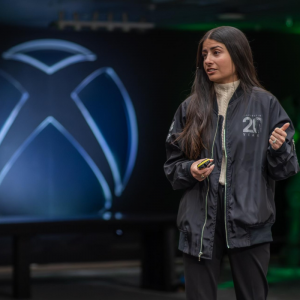
Asha Sharma at Microsoft/Xbox, representing the next chapter of large-scale gaming platforms and AI-powered ecosystems.

Matt Booty at Xbox Game Studios, helping guide one of the world’s largest portfolios of game studios and franchises.

Kim Libreri at Epic Games, advancing the future of real-time 3D and creative technology.


Laura Miele at Electronic Arts, shaping major entertainment franchises and large-scale game development strategy.

Strauss Zelnick at Take-Two Interactive, leading one of the most influential companies in premium gaming IP.

A. Dylan Jadeja at Riot Games, expanding the future of live-service games, esports, and global fandom.

Johanna Faries at Blizzard Entertainment, steering one of gaming’s most iconic creative brands.

Hermen Hulst at PlayStation Studios, representing premium console experiences and cinematic game storytelling.

Jade Raymond of Haven Studios, known for major studio building and creative leadership.

Mike Morhaime of Dreamhaven and Blizzard legacy, whose influence on studio culture remains significant.

Min-Liang Tan at Razer, connecting gaming hardware, lifestyle, esports, and gamer identity.

Ilkka Paananen at Supercell, one of the defining leaders in mobile gaming.

Changhan Kim at KRAFTON, connected to the global rise of PUBG and Korean gaming innovation.

Phil Rogers at Embracer Group, representing the complexity of modern publishing, restructuring, and IP strategy.

Mark Pincus of Zynga, a pioneer of social gaming.

Riccardo Zacconi of King, linked to one of mobile gaming’s biggest success stories, Candy Crush.

Brenda Romero of Romero Games, a respected creative voice in game design and education.

Jenova Chen of thatgamecompany, known for emotional, artistic, and human-centered game experiences.

Alban Dechelotte of G2 Esports, helping turn esports teams into global entertainment brands.
Together, these leaders show how wide the gaming industry has become. It is no longer only about consoles or mobile apps. It is about engines, communities, creators, competition, storytelling, hardware, AI, and culture.
AI Enters the Game
AI is beginning to reshape how games are imagined, produced, tested, and personalized.
Artificial intelligence is one of the most discussed topics in gaming today — and also one of the most sensitive.
AI can help accelerate concept art, testing, localization, coding, animation, customer support, and procedural content. It may help smaller teams build bigger worlds and allow larger studios to personalize game experiences in new ways.
But the industry is also asking difficult questions. How should AI be used ethically? How can companies protect artists, writers, designers, and developers? What happens to originality when machines can produce content at speed?
The future will not belong to companies that simply use AI because it is fashionable. It will belong to those that use it intelligently — as a tool that supports human creativity rather than replacing it.
What Comes Next?
The gaming industry is entering a new stage. The next few years will likely be defined by several major directions:
Gaming platforms will become more social, more creator-driven, and more open to cross-platform play.
AI will become a normal part of development pipelines, but companies will need clear rules and responsible creative standards.
Esports will continue evolving from tournament culture into broader entertainment, lifestyle, and brand ecosystems.
In-game advertising and digital commerce will grow, especially as brands look for more natural ways to reach younger audiences.
Game engines will expand beyond gaming, becoming infrastructure for virtual production, simulation, education, and future digital experiences.
Mobile gaming will remain enormous, but growth will increasingly depend on quality, retention, community, and smarter monetization.
Most importantly, the line between “game,” “social platform,” “entertainment brand,” and “creative economy” will continue to blur.
Why Gaming Belongs in the Future Conversation
Gaming has become one of the clearest mirrors of where technology and society are going. It shows how people want to connect, compete, create, learn, escape, and express themselves.
It is also one of the rare industries where innovation is immediately tested by millions of people. A new interface, mechanic, marketplace, or social model does not stay theoretical for long. Players respond quickly. Communities grow or disappear. Ideas succeed because people actually choose to spend time with them.
That makes gaming a powerful field for recognition.
The leaders shaping this industry are not only building entertainment products. They are building new forms of culture, technology, and digital life. They are helping define how future generations will play, learn, socialize, and imagine.
And in a world where innovation often feels distant or complicated, gaming reminds us of something essential: the future should not only be smarter. It should also be more creative, more human, and maybe even a little more fun.
Conclusion
World Future Awards celebrates companies and leaders whose innovations are shaping tomorrow. If your company is creating breakthrough products, platforms, technologies, or experiences in gaming, esports, entertainment, AI, virtual worlds, or interactive media, now is the time to share your achievement with a global audience.
Apply for World Future Awards and let the world discover the innovation behind your game-changing vision: https://worldfutureawards.com/application/
Resourses:
Newzoo Global Games Market Report 2025 for market size and player growth.
PwC Global Entertainment & Media Outlook 2025–2029 for future entertainment and media growth.
Bain & Company Gaming Report 2025 for trends in user-generated content, community, platform games, and direct-to-consumer models.
GDC 2025 State of the Game Industry for developer trends around AI, layoffs, and industry change.
MORE NEWS

TOP 20 FUTURE TECH UNIVERSITIES 2026

VVater Wins WFA 2026 for Next-Generation Sustainable Water Treatment Technology

VVater: Electrifying the Future of Sustainable Water Treatment
The New Space Race Is Becoming a Technology Race

Top 25 Biotech Breakthroughs Shaping 2026
The Rise of the Physical AI Economy
50 Venture Tech Companies and Leaders to Watch in 2026
NEWSLETTER
Sign up to learn more about our project and to stay up to date.