
Connected Futures: The Rise of Smart Homes

How intelligent can smart homes really become? The World Future Awards explores how the home of the future is no longer a distant concept; it is emerging and powered by intelligent technologies that understand, predict, and adapt to human needs. Smart homes are evolving from simple voice-activated systems into interconnected environments that think and respond with purpose. Fueled by advancements in artificial intelligence (AI), renewable energy, and the Internet of Things (IoT), tomorrow’s homes are becoming more efficient, intuitive, and environmentally responsible, shaping a new relationship between people and the spaces they inhabit. 

The Shift Toward Intelligent Living

Early smart homes were defined by convenience, allowing users to turn on lights, adjust thermostats, or stream music with a simple command. Today, that definition is expanding. AI-enabled systems interpret human behavior, learn daily routines, and coordinate devices across the household. This interconnected intelligence allows homes to adjust lighting based on mood, manage energy consumption automatically, and even monitor wellness indicators, creating living spaces that respond dynamically rather than reactively.

Real-World Momentum

According to a report by The AI Journal titled “How AI Is Rewiring Smart Homes and Personal Computing”, smart environments are shifting from simple automation to adaptive intelligence. The article highlights how new AI models can interpret multiple data sources, such as sensors, cameras, and wireless signals, to infer user intent and predict needs. For example, saying “I’m going to bed” can trigger a sequence of coordinated actions: locking doors, dimming lights, adjusting temperature, and activating security systems. This evolution signals a move toward what researchers call ambient intelligence, where technology fades into the background while enhancing comfort and safety.

To see how these trends could play out in practice, Tesla’s recent move in the UK provides an example. The company has applied for and is now under consideration for a license to supply electricity to homes and businesses, leveraging its existing solar panels, Powerwall batteries, and EV networks. This step illustrates how smart home technology, integrated energy systems, and renewable solutions can converge to create new opportunities in the household energy market.

Energy, Efficiency, and Sustainability

Beyond convenience, smart homes are addressing one of the most pressing global challenges: sustainability. Integration with renewable energy systems, such as rooftop solar panels and smart batteries, allows households to generate, store, and optimize their own power. AI-driven analytics can forecast consumption, manage peak loads, and reduce waste, transforming homes into microgrids that contribute to a cleaner energy ecosystem. In regions prioritizing green development, this capability is reshaping residential design and influencing broader urban infrastructure.

Personalization and Predictive Design

The next generation of connected homes will not just automate tasks but anticipate them. Predictive systems can learn when a resident prefers certain temperatures or lighting conditions, preparing the environment before a command is even given. Through wearable devices and health sensors, homes will also adapt to personal wellness, offering real-time feedback and support for healthier living. This integration of data, comfort, and intuition represents a fundamental step toward environments that understand people as individuals, not users.

An Interesting Turning Point

The rise of smart homes marks a turning point in how humans interact with technology. As AI, IoT, and renewable energy converge, the home becomes more than a shelter; it becomes an intelligent ecosystem attuned to its inhabitants and the planet. The promise of connected living lies not in complexity but in subtlety: technology that listens, learns, and supports life quietly and intelligently. The future is responsive, efficient, and deeply human.

Apply for recognition today and amplify your impact on tomorrow: https://worldfutureawards.com/apply-now/

Sources: The AI Journal, Energy Digital

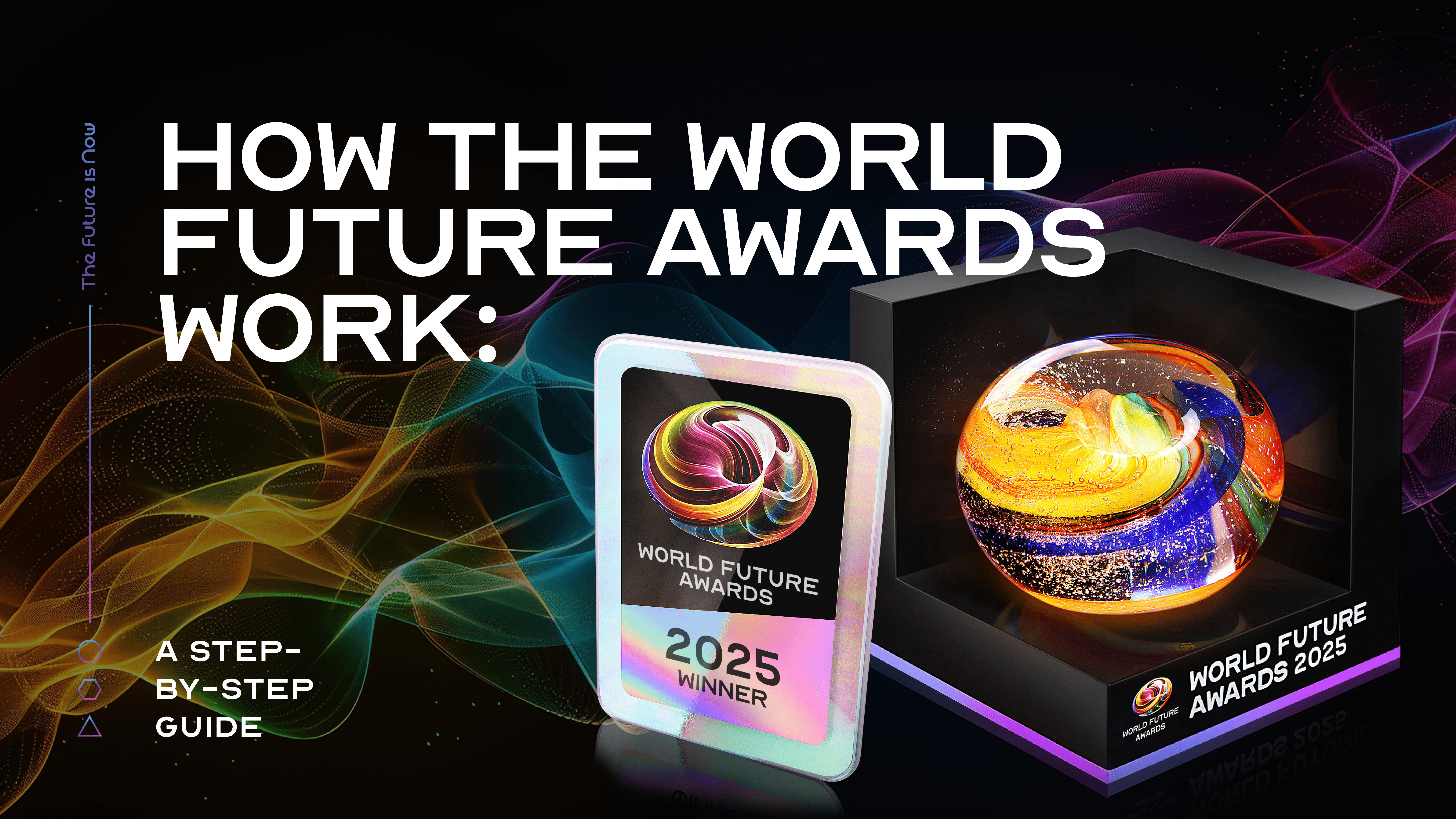
How the World Future Awards Work: A Step-by-Step Guide

Innovation shapes the future, but recognizing it requires a process that’s both precise and transparent. The World Future Awards (WFA) has designed a clear pathway to spotlight pioneering products and services that have the potential to make a real difference. From initial nominations to tailored promotion for winners, the process is structured into four key stages: Nominations, Winner Selection, Winners Announcement, and Winner Promotion.

Nominations: Finding the Best Innovators

The first stage of the WFA process focuses on identifying standout products and services that can positively impact society. Nominations are either made by the WFA selection board or submitted directly by companies through the “Apply Now” form. The awards team conducts extensive industry research to identify innovations with significant potential.

Actionable Insight: Companies aiming for recognition should ensure their applications clearly demonstrate the societal benefits and practical applications of their innovation.

Winner Selection: A Rigorous Evaluation

Once nominations are submitted, WFA’s research team evaluates each candidate using a combination of nominee-provided information and publicly available data. Sources include press coverage, social media, market research reports, expert commentary, and online databases.

Winners Announcement: Recognition in the Digital Space

WFA winners are revealed online through the official WFA website, social media channels, and media partner platforms. The awards program has chosen a fully digital approach, foregoing traditional offline ceremonies. This ensures that announcements are widely accessible and can reach a global audience quickly.

Actionable Insight: Companies should plan their own digital campaigns around the announcement to maximize visibility and capitalize on the attention generated by WFA recognition.

Winner Promotion: Amplifying Success

Winning the WFA comes with tailored advertising and promotional support, depending on the chosen promotion package. The WFA team assists with marketing materials, press releases, and product or service reviews across WFA platforms and leading specialist media. Winners also gain automatic eligibility to participate in the following year’s nomination cycle, creating an ongoing cycle of visibility and recognition.

Actionable Insight: Collaborate closely with PR experts to leverage promotional opportunities, ensuring your innovation reaches the right audience and gains maximum credibility.

Research and Selection Method: Transparency Matters

WFA emphasizes transparency and credibility by conducting online market research using publicly available data. Their teams assess innovations against industry-specific criteria and publicly verifiable information. This ensures that every winner is chosen based on clear, factual evidence rather than subjective opinions.

Actionable Insight: Maintain accurate, up-to-date public records and media coverage of your innovation, as these will be critical in the WFA’s evaluation process.

Selection Criteria

Each winner is determined through thorough category- and region-based research using the following criteria:

  • Emotional Quotient (EQ): Ability of a product or service to bring satisfaction or pleasure along with practical benefits.
  • Innovation: Solutions that not only address existing problems but open up new fields and markets. Consideration is given to the entire innovation process, from concept to implementation.
  • Value: Evidence of uniqueness, advantages over alternatives, and economic profitability.
  • Timeliness: The product or service should be no more than five years old and having proven it meets evaluation criteria.
  • Delivery: Effective communication of innovation, consumer engagement, market introduction, and validation of its value proposition.
  • Quality: Potential to improve the quality of life for individuals and society over the long term.
  • Impact: Contribution to society and the environment, and the potential to inspire new ideas or products.

The WFA spotlights the ideas that could transform tomorrow. By navigating its structured process, companies have the chance to turn breakthrough concepts into global recognition, amplifying their impact and leaving a lasting mark on the future.

Apply for recognition today and amplify your impact on tomorrow: https://worldfutureawards.com/apply-now/

Signals from the Future: Key Technology Trends to Watch in 2025 

Innovation continues to evolve at a pace that challenges how organizations think, work, and compete. McKinsey’s Technology Trends Outlook 2025 presents a clear picture of the forces shaping the global technology landscape over the coming years. These insights are not only useful for technologists, they serve as a strategic compass for leaders across industries. It is in this spirit that the World Future Awards celebrates initiatives that turn such emerging opportunities into tangible advancements for society. 

The AI Revolution 

Artificial intelligence continues to dominate the global technology conversation, but McKinsey highlights a notable shift toward agentic AI, systems capable of autonomously planning and executing complex, multi-step operations alongside general AI capabilities. These solutions can act as dynamic collaborators rather than passive tools, streamlining processes that once demanded significant human oversight. 

Actionable Insight: Organizations can begin by experimenting with agentic workflows for repetitive decision-making tasks such as report generation, scheduling, or preliminary research. By starting with clear, repeatable processes, businesses can evaluate efficiency gains while refining trust in autonomous systems before scaling up. 

Compute & Connectivity Frontiers 

The report also outlines six enabling technologies powering next-generation solutions: 

  • Application-specific semiconductors designed for AI and other targeted workloads. 
  • Advanced connectivity spanning 5G, early 6G development, and LEO satellite networks. 
  • Cloud and edge computing for balanced performance, efficiency, and data sovereignty. 
  • Immersive-reality technologies in AR/VR are powered by AI-driven rendering and advanced haptics. 
  • Digital trust and cybersecurity for identity assurance and system protection. 
  • Quantum technologies for faster computation, secure communication, and advanced sensing. 

Actionable Insight: Leaders should identify which of these enablers align most closely with their strategic priorities. For instance, immersive commerce ventures may benefit from combining edge computing, advanced connectivity, and purpose-built chips with robust cybersecurity. A phased roadmap (prototype, pilot, and then scale) can minimize risks while building market readiness. 

Cutting-Edge Engineering Domains 

Beyond digital enablers, the spotlight is placed on engineering-driven innovation areas: robotics, mobility, bioengineering, space technologies, and energy and sustainability solutions. Each holds potential for reshaping entire sectors, from autonomous delivery systems to bio-fabricated materials and low-carbon energy storage. 

Actionable Insight: Organizations can focus on the domain that most strongly connects to their mission. Partnering with research institutions or nimble startups can accelerate development. Launching pilot projects (such as a renewable-powered robot or a bioengineered product prototype) helps demonstrate value to stakeholders and secures further investment. 

Overarching Themes and Enablers 

The report emphasizes cross-trend dynamics that will influence how these technologies evolve: 

  • Rising demand for computational power from AI, robotics, and immersive platforms. 
  • New human–machine collaboration models where technology works as a co-creator. 
  • Scaling challenges involving infrastructure, supply chains, regulation, and talent. 
  • National and regional competition for strategic capabilities like chip fabrication and quantum labs. 
  • Combining large-scale AI systems with specialized edge devices. 
  • Embedding ethics, transparency, and accountability into innovation. 
     

Actionable Insight: Begin with a clear map of both internal strengths and external dependencies, covering infrastructure, skills, supply chain resilience, and regulatory requirements. Prioritize technology designs that improve human collaboration, invest in specialized edge systems, and apply strong ethical frameworks from the start to strengthen public trust. 

Final Thoughts 

The technologies outlined, from autonomous AI agents to quantum computing, offer more than just efficiency gains; they present opportunities to reimagine products, services, and societal impact. The WFA shines a spotlight on those turning such possibilities into practical achievements. For organizations seeking to lead in this new era, success will come from aligning breakthrough technologies with pressing human needs, backed by thoughtful strategy, ethical practices, and the agility to adapt as innovation accelerates. 

Apply for recognition today and amplify your impact on tomorrow: https://worldfutureawards.com/apply-now/  

SOURCES: MCKINSEY 

Future-Proof Strategies: Building Resilient Brands in an Uncertain World

Resilience is no longer just a desirable attribute for brands; it is a necessity. The future hinges on the ability to withstand shocks, adapt to new realities, and reinvent oneself while honoring heritage. At World Future Awards, we recognize that building resilient brands is about more than surviving today’s uncertainties; it’s about shaping tomorrow’s possibilities.

As the world faces economic shifts, political unrest, and changing consumer values, how can brands future-proof themselves and lead with purpose?

Heritage as a Foundation for Longevity

Resilience begins with a deep respect for legacy. The most enduring outstanding brands cultivate a rich narrative that transcends fleeting trends, embedding timelessness into their identity. This sense of heritage is not just about nostalgia; it provides a stable foundation during uncertain times.

Actionable Insight: Resist the urge to chase short-term wins (such as excessive discounting) that could undermine long-term brand equity.

Integrating Sustainability as a Strategic Imperative

For brands committed to resilience, sustainability is not an add-on but a core principle. Balancing craftsmanship and exclusivity with transparency and eco-consciousness requires foresight and dedication.

Consumers now expect brands to lead in ethics, not follow. Those that treat sustainability as a value driver (not a marketing trend) position themselves for long-term relevance.

Actionable Insight: Invest in transparent reporting and storytelling that highlights your environmental and social impact in ways that resonate with conscious consumers.

Digital Innovation with a Human Touch

Technology continues to reshape consumer engagement and expectations. The rise of immersive digital experiences, virtual showrooms, and AI-powered personalization offers exciting possibilities, but also risks diluting the personal, tactile connection that defines outstanding brands.

Resilient brands do not let digital replace intimacy; they use it to amplify it.

Actionable Insight: Create hybrid experiences that combine high-tech tools with high-touch moments, for example, digital consultations followed by bespoke in-person experiences.

Agility Through Global Diversification

No brand can afford to rely solely on a single market or region. Diversification across geographies allows houses to navigate disruptions caused by geopolitical tensions, economic downturns, or shifting consumer trends. That is why brands that spread their presence internationally unlock resilience through flexibility.

Actionable Insight: Map your geographic revenue exposure and identify over-concentration risks. Explore entry into emerging markets that align with your values and customer profile.

Leading with Vision in Times of Change

True resilience requires more than reactive measures; it demands proactive leadership. Brands that anticipate change and innovate ahead of the curve don’t just survive disruptions; they define what comes next.

By reimagining product lines, investing in technology, and evolving consumer experiences, resilient brands grow through transformation.

Actionable Insight: Pilot new ideas rapidly, from circular economy models to AI-driven services, so your brand remains agile and culturally relevant.

Key Takeaways: Foundations for Future-Proof Brands

  • Honor Heritage to Build Trust: Codify and protect your legacy. Consistency builds value that survives market cycles.
    Embed Sustainability as a Core Principle: Treat ethics and responsibility as a long-term investment in credibility and growth.
  • Leverage Technology Thoughtfully: Blend innovation with intimacy. Let digital tools enhance, not dilute, human connection.
  • Expand Geographically for Agility: Diversify your footprint to reduce risk and stay responsive in dynamic markets.
  • Lead with Strategic Foresight: Innovate before disruption forces change. Future-proofing begins with vision.

Economic uncertainty and social shifts will continue to reshape the industrial landscape. But brands embed resilience into their DNA through heritage, sustainability, innovation, and agility.

At the World Future Awards, we lead the way forward. Resilience empowers companies, creators, and changemakers to build a sustainable legacy for generations to come.

Apply for recognition today and amplify your impact on tomorrow: https://worldfutureawards.com/apply-now/

Building Experiences, Not Just Products: The Future of Tech

In an era saturated with digital tools, software updates, and feature-packed platforms, the most successful tech companies aren’t just shipping products — they’re curating experiences. The difference is subtle but critical: products solve problems, while experiences build connections, loyalty, and meaning.

As we look toward the next wave of technological evolution, the defining question for companies is no longer “What does your product do?” but “How does it make people feel?”

Why Experience is the New Differentiator

In today’s hypercompetitive market, functionality is table stakes. Two apps may offer identical features, but the one that delivers a smoother, more intuitive, more emotionally resonant user journey will win every time. It’s why design-led companies like Apple, Notion, and Airbnb continue to lead in customer satisfaction and brand loyalty.

Users expect more than efficiency — they expect elegance, emotion, and engagement. That’s what defines a modern experience.

From MVP to MVE: The Rise of the Minimum Viable Experience

We’re moving beyond the MVP (Minimum Viable Product) era into the age of the MVE — Minimum Viable Experience. That means companies need to consider emotional design, onboarding delight, seamless feedback loops, and even subtle micro-interactions as part of their core value offering.

Functionality gets you in the game; experience keeps you there.

Emerging Technologies Make Experience Central

Technologies like AI, XR, and voice interfaces are pushing us further into experience-first territory. Consider:

  • AI that predicts your intent, not just responds to input
  • AR/VR tools that integrate physical and digital seamlessly
  • Voice that interacts with empathy and tone, not just keywords

The future of tech lies not in devices or software, but in crafting holistic ecosystems of engagement that feel natural, human, and personal.

Metrics Are Shifting: From Usage to Emotion

Old metrics like time-on-app or daily active users are being replaced by more nuanced signals: customer sentiment, NPS, emotional engagement, and retention through delight. Teams now ask:

  • Does our product feel good to use?
  • Are we reducing cognitive load or creating it?
  • Are we building loyalty or just logging clicks?

This marks a cultural shift as much as a technical one.

Building for the Human, Not Just the User

At its core, experiential tech centers around empathy. It demands that we build not just for “users,” but for real, complex humans navigating chaotic, digital-heavy lives. That means designing for accessibility, inclusion, emotion, and flexibility, not just efficiency and speed.

Experience Is the Future of Innovation

The most forward-thinking tech companies are investing in experience as a primary driver of growth and differentiation. Whether you’re building the next productivity app, AI assistant, or digital workspace, the future isn’t just in what you build, but in how people experience it.

Because in tomorrow’s tech landscape, experiences scale. Products don’t.

Apply for the World Future Awards today to stay ahead of the game: https://worldfutureawards.com/apply-now/

From Validation to Vision: The Business Value of Being Recognized

In a future-focused world where progress defines relevance, recognition is more than celebration — it is a catalyst for innovation. At World Future Awards, we understand that honoring achievements across industries inspires not only individual growth but also collective advancement. In an age of transformation, recognizing excellence has never been more critical.

From cutting-edge technology and sustainable development to design, services, and customer experience, awards serve as both validation and vision. Here’s why recognition matters — and how it fuels advancement in every sector.

Credibility That Transcends Borders

In today’s interconnected global economy, businesses must establish trust quickly and credibly. Third-party recognition from a respected body like World Future Awards offers an objective signal of excellence to investors, consumers, and partners worldwide.

Actionable Insight: Display award seals and credentials across digital platforms and proposals. Let the world know you’ve been vetted by experts.

Attracting Talent and Partnerships

The most innovative professionals and collaborators gravitate toward organizations that are seen as forward-thinking and impactful. Awards not only highlight your past achievements — they shape your future workforce and alliances.

Actionable Insight: Use award recognition in employer branding, talent recruitment, and joint venture pitches to stand out in a competitive landscape.

Driving Internal Innovation

Recognition doesn’t just boost your public image — it energizes your internal teams. Award-winning companies often see improved morale, creativity, and alignment with their mission.

Actionable Insight: Share the award journey with employees. Involve teams in submissions and celebrate milestones to foster a culture of excellence.

Market Differentiation in a Noisy World

Regardless of industry — be it fintech, healthcare, education, or retail — market saturation is a real challenge. Recognition creates a point of differentiation that signals quality, innovation, and leadership.

Actionable Insight: Use your award as a storytelling tool in marketing, advertising, and social media campaigns. Showcase your edge.

Enhanced Investor and Stakeholder Confidence

Awards offer strategic leverage during funding rounds, board presentations, and stakeholder updates. They reinforce your brand’s trajectory, impact, and reliability.

Actionable Insight: Include awards in investor decks, quarterly reports, and pitch documentation to support your value proposition.

Empowering Sustainable and Responsible Innovation

As the world demands more ethical and sustainable solutions, awards help validate companies and projects that are driving positive change. Recognition promotes responsibility and accountability.

Actionable Insight: Leverage awards in ESG reports and sustainability communications to reinforce your leadership in responsible innovation.

Recognition Isn’t a Finish Line — It’s a Launchpad

At World Future Awards, we don’t just celebrate the future — we help build it. Recognition empowers companies, creators, and changemakers to grow with purpose, gain trust, and continue leading in their industries.

Whether you’re a startup challenging the status quo or a multinational scaling new heights, recognition matters.

Apply for recognition today and amplify your impact on tomorrow: https://worldfutureawards.com/apply-now/

From Insight to Impact: Leveraging Data for Competitive Advantage

In tech, innovation is no longer just about products—it’s about the experiences they create. Whether you’re a SaaS provider, a cloud platform, or a consumer tech brand, the most successful companies today are those who turn data into a competitive advantage across the client journey.

From smarter onboarding to proactive support, and from personalized recommendations to strategic product development, data, powered by both analytics and AI, can transform how tech companies engage with their clients.

Here’s how to do it right.

Personalization That Evolves with the User

Clients want relevance, not just functionality. Static segments and one-size-fits-all user flows often fall short of delivering the kind of intuitive, personalized experience users now expect.

🔍 Actionable Insight:

  • Combine behavioral analytics with AI-driven recommendations to dynamically adjust content, features, or notifications.
  • Move beyond demographic data and use contextual cues—such as usage patterns, device types, or user roles—to tailor experiences.
  • Use real-time data to personalize dashboards, tutorials, or upgrade paths.

Example: A platform for developers notices a user frequently accesses specific APIs. It then surfaces documentation, tips, and integrations related to those endpoints, streamlining their experience and encouraging deeper engagement.

Intelligent Onboarding: Guided by Data, Informed by AI

First impressions matter. A data-informed onboarding journey can significantly increase activation rates and reduce early churn.

🔍 Actionable Insight:

  • Use AI to analyze onboarding drop-offs and identify bottlenecks across user types.
  • Trigger automated guidance when users encounter friction, based on real-time behavioral patterns.
  • Tailor onboarding sequences by role, industry, or prior tool usage to make the process more relevant.

Example: A team collaboration tool uses AI to identify users who haven’t invited team members within the first 5 days, then sends a personalized nudge with quick-start templates for group projects.

Proactive Support Powered by Predictive Analytics

Today’s client experience extends far beyond the support ticket. The goal is to identify and resolve issues before they happen.

🔍 Actionable Insight:

  • Use predictive analytics to flag accounts at risk of churn or technical issues.
  • Analyze usage trends to identify common issues and proactively offer solutions.
  • Implement AI-powered chatbots or virtual assistants to handle FAQs while escalating complex queries to human support.

Example: A SaaS company tracks declining usage in enterprise accounts and proactively assigns a success manager before disengagement occurs, backed by AI-generated insights on usage gaps.

Continuous Feedback Loops with Real-Time Data

Feedback is more than a survey—when paired with operational and behavioral data, it becomes a powerful tool for real-time optimization.

🔍 Actionable Insight:

  • Combine qualitative input (NPS, reviews) with quantitative data (logins, feature usage) to surface actionable insights.
  • Use natural language processing (NLP) to categorize and understand large volumes of feedback.
  • Build systems where users can see their feedback reflected in product updates, boosting satisfaction and advocacy.

Example: A software platform tags and clusters user feedback using NLP, surfacing requests for a new integration. Within weeks, it launches a beta version—improving trust and engagement.

Aligning Teams with Centralized, Client-Focused Intelligence

Exceptional experiences require alignment. When sales, product, marketing, and support teams all access the same insights, decision-making becomes faster and more client-centric.

🔍 Actionable Insight:

  • Create shared dashboards that highlight usage trends, support history, and satisfaction metrics.
  • Use AI to surface opportunity signals (e.g., likelihood to upgrade) to customer-facing teams in real-time.
  • Ensure leadership reviews client data regularly as a strategic input, not just an operational one.

Example: A product team uses client success metrics and support trends to decide which features to improve in the next release, focusing on experience, not just functionality.

Final Insight: The Tech is Smart—Make the Experience Smarter

In a digital-first industry, data is the foundation of every meaningful interaction. But it’s not about collecting more—it’s about using it intelligently.

By integrating analytics with responsible AI and pairing insight with empathy, tech companies can deliver client experiences that are not only efficient but exceptional. The goal? An ecosystem where every touchpoint feels timely, tailored, and intuitive.

Because in the end, data isn’t just a metric—it’s a story. And the best brands know how to read it.

Are you defining the future? It’s time the world knew: https://worldfutureawards.com/apply-now/

10 Timeless Entrepreneurial Lessons for Long-Term Success

The entrepreneurial journey is often filled with highs and lows, but there are key lessons that can guide any aspiring founder toward success. Whether you’re just starting out or looking to scale, these insights will help you navigate the road ahead. The World Future Awards presents 10 essential lessons every entrepreneur should know to achieve success:

1. Keep Pushing Forward

Every entrepreneur faces rejection, setbacks, and failure. But the most successful ones don’t give up. They persist through the tough times, learn from their mistakes, and continue pushing forward. The path to success is rarely a straight line, but with persistence, you can weather the storms and eventually reach your goals.

Takeaway: Don’t let failure discourage you. Stay committed to your vision, and success will follow.

2. Innovate or Stagnate

To stand out and thrive, you must bring something unique to the table. Successful entrepreneurs often introduce new ideas, challenge the status quo, and find innovative solutions to existing problems. This mindset of constant innovation allows them to stay ahead of the curve and differentiate themselves from competitors.

Takeaway: Always strive to innovate. Look for ways to solve problems differently and disrupt the norm.

3. Passion Powers Progress

Entrepreneurship is demanding, requiring long hours, tough decisions, and constant problem-solving. Without passion for what you’re doing, it’s easy to lose motivation during difficult times. Passion fuels perseverance and helps you stay focused on your mission, even when the road gets tough.

Takeaway: Let your passion drive you. When you love what you do, it makes the hard work worth it.

“Stop chasing money and start chasing the passion.” – Tony Hsieh

4. Take the Leap

Risk is inherent in entrepreneurship, but the right kind of risk—calculated and thoughtful—can lead to great rewards. Entrepreneurs who are willing to step outside of their comfort zone and make bold decisions often find success in areas others might shy away from. Taking risks doesn’t mean being reckless, but rather being willing to make informed choices that could lead to growth.

Takeaway: Don’t fear risk. Take calculated chances to drive your business forward and open doors to new opportunities.

5. Tech is Your Ally

The modern entrepreneur has access to a wide array of tools and technologies that can streamline operations, enhance productivity, and improve customer experiences. By leveraging technology effectively, entrepreneurs can scale their businesses more efficiently, reach a larger audience, and stay competitive in a fast-changing world.

Takeaway: Use technology to your advantage. It can help you work smarter, not harder.

6. Teamwork Makes the Dream Work

While the entrepreneurial journey may begin solo, it’s impossible to go far without the right team. Surround yourself with talented, motivated individuals who complement your skills. A strong team helps share the load, brings fresh ideas to the table, and enables you to solve complex problems more effectively.

Takeaway: Surround yourself with people who share your vision and bring expertise to the table. A strong team is essential for growth.

“Great things in business are never done by one person. They’re done by a team of people.” – Steve Jobs

7. Adapt and Thrive

The ability to pivot and adapt is a critical skill for any entrepreneur. The business landscape changes constantly, and being adaptable allows you to respond to new challenges, market shifts, and unexpected opportunities. Flexibility is key to overcoming obstacles and finding success in uncertain times.

Takeaway: Stay flexible. Embrace change and remain open to new ideas and approaches.

8. Put Customers First

Building a business that thrives means understanding your customers deeply. Successful entrepreneurs listen to their customers, gather feedback, and make sure they are delivering products or services that truly meet their needs. A customer-centric approach helps ensure long-term loyalty and positive word-of-mouth.

Takeaway: Keep the customer at the heart of everything you do. Their satisfaction is your success.

9. Communicate to Connect

Clear communication is essential in every aspect of entrepreneurship. Whether it’s with team members, investors, or customers, being able to articulate your ideas, listen to others, and foster collaboration will make or break your business. Effective communication builds trust, aligns everyone with your vision, and keeps things moving forward.

Takeaway: Be an effective communicator. Your ability to express ideas and listen to feedback will help you build strong relationships.

10. Learn, Grow, Repeat

No matter how successful you become, there’s always more to learn. The best entrepreneurs are lifelong learners. They stay curious, seek out new knowledge, and continuously improve their skills. This mindset helps them stay competitive, solve new challenges, and foster a culture of innovation within their businesses.

Takeaway: Never stop learning. Embrace the process of growth and always be open to new ideas and opportunities.

The road to entrepreneurial success is rarely smooth, but these 10 insights provide a roadmap to help you navigate the challenges along the way. From persistence and passion to innovation and adaptability, these lessons will help guide you as you build your business, grow as a leader, and turn your vision into reality. Whether you’re launching your first startup or scaling an existing one, keeping these insights in mind will help ensure you’re on the path to success.

Ready to take your entrepreneurial journey to the next level? Explore the World Future Awards and discover how innovation, leadership, and vision are shaping the future. Join the movement today: https://worldfutureawards.com/

NEWSLETTER

Sign up to learn more about our project and to stay up to date.