
15 Drone Companies WFA Is Watching

The global drone industry is no longer defined by hardware alone. Today, the sector represents a convergence of autonomy, software, secure communications, infrastructure intelligence, public safety, emergency response, and sovereign manufacturing. Drones are rapidly evolving into essential tools for governments, enterprises, and critical industries worldwide.

In the United States alone, the FAA projects the commercial drone fleet to exceed one million aircraft in 2025, while remote-pilot certifications continue to expand. This growth reflects how drone technology is moving deeper into regulated, professional, and institutional use cases across infrastructure, logistics, energy, agriculture, mapping, and security operations.

At the same time, the drone market is entering a new era in which trust, compliance, resilience, and supply-chain confidence matter as much as flight performance itself. The Special Competitive Studies Project reported that DJI products still account for approximately 70% to 90% of drones used across U.S. applications, while Reuters noted in January 2026 that Washington withdrew one proposed restriction plan on Chinese-made drones even as separate FCC restrictions on new foreign-made models remained in place.

This dynamic highlights one of the most important strategic questions shaping the future of autonomous systems today: who will define the next generation of trusted aerial systems?

This WFA watchlist is not a ranking. It is a research-led selection of drone companies shaping the future of commercial drones, autonomous systems, public safety, infrastructure intelligence, resilient deployment models, and sovereign technological capability.

1. Skydio 🇺🇸

Skydio stands out as one of the strongest autonomy-first players in the Western market. Its positioning across public safety, inspection, and remote operations — combined with its selection under a NATO procurement framework in 2025 — makes it a key company to watch in the rise of trusted autonomous systems. 

2. Parrot 🇫🇷

Parrot is highly relevant to the European trusted-drone conversation. Its ANAFI USA line is positioned as Blue sUAS-approved and NDAA/TAA-compliant, while the broader Parrot portfolio shows how a European player can compete on secure architecture, public-safety relevance, and sovereign positioning. 

3. Quantum Systems 🇩🇪

Quantum Systems is one of the most interesting European names because it spans both geospatial and security-oriented aerial intelligence. Its Trinity Pro platform targets professional surveying and mapping, while Vector AI reflects the company’s wider ambition in automated aerial intelligence and resilient field deployment. 

4. Delair 🇫🇷

Delair deserves attention for its focus on professional data capture, digital twins, infrastructure monitoring, corridor mapping, and security applications. It represents the industrial face of the drone sector: less consumer-facing, but deeply relevant to infrastructure intelligence, asset management, and resilient operations. 

5. ACSL 🇯🇵

ACSL is a meaningful sovereign-capability story in Asia. The company emphasizes made-in-Japan drones and secure deployment, and it has highlighted government adoption in Japan as it positions itself around domestic production, economic security, and non-Chinese alternatives. 

6. ideaForge 🇮🇳

ideaForge is one of the clearest companies to watch in India’s rising drone ecosystem. Reuters has described it as a manufacturer of VTOL and fixed-wing hybrid UAVs for security and surveillance, and it sits directly within a broader Indian push to expand domestic drone manufacturing and reduce dependence on imported components. 

7. AeroVironment 🇺🇸

AeroVironment remains one of the most consequential U.S. unmanned-systems companies. The company says it has delivered more than 50,000 autonomous systems into high-intensity operational environments, and its portfolio now spans UAS, counter-UAS, robotics, and mission systems — making it central to any serious conversation about resilient aerial capability. 

8. Shield AI 🇺🇸

Shield AI is especially important because it combines aerial platforms with autonomy software. Its V-BAT is positioned for GNSS-denied and communications-contested environments, and the company has recently highlighted operational progress with the Royal Netherlands Navy — a useful signal of how trusted autonomy is moving from concept to fielded capability. 

9. Anduril Industries 🇺🇸

Anduril is not simply building drones; it is building networked autonomous systems. With products spanning counter-UAS, autonomous air vehicles, and software-defined defense architecture, the company is helping define how aerial systems will be integrated into broader sensing, command, and protection ecosystems. 

10. General Atomics Aeronautical Systems 🇺🇸

General Atomics remains a benchmark in the long-endurance category. The MQ-9B SkyGuardian is designed for 40+ hours of flight and for safe integration into civil airspace, which makes the company especially relevant to the future overlap between strategic aerial systems, maritime awareness, border security, and civil-authority applications. 

11. Baykar 🇹🇷

Baykar has become one of the world’s most important exporters of large unmanned aircraft. In January 2026, the company said it had export contracts with 36 countries for Bayraktar TB2 and 16 for AKINCI, underscoring its growing influence in sovereign capability, industrial scale, and international market reach. 

12. Teledyne FLIR Defense 🇺🇸 🇨🇦

Teledyne FLIR Defense is a strong name in mission-focused unmanned systems, especially through the SkyRanger R70. The platform is marketed with open architecture, advanced autonomy, AI-enabled capability, and drone-in-a-box concepts that point toward a future of persistent, automated situational awareness for both government and non-military uses. 

13. Skyeton 🇺🇦

Skyeton is one of the clearest examples of a Ukrainian company with both operational credibility and broader dual-use relevance. The company says Raybird offers 28+ hours of endurance and is suitable not only for long-range aerial intelligence, but also for disaster response, humanitarian operations, and other civilian applications where resilient airborne awareness matters.

14. DJI 🇨🇳

DJI remains the most structurally important commercial drone company in the world. Its enterprise business spans public safety, geospatial applications, inspection, agriculture, and industrial operations, making it one of the clearest examples of drones evolving into practical tools for protecting communities, monitoring assets, and improving decision-making in the field.  

15. Autel Robotics 🇨🇳

Autel remains an important company in the global enterprise segment, with solutions positioned around security, inspection, surveying, and mapping. As the market continues to professionalize, Autel is one of the manufacturers worth watching for how Chinese drone makers adapt to a more trust-sensitive, compliance-focused global environment. 

Conclusion

From World Future Award’s perspective, the most important drone companies are no longer defined only by airframes or hardware performance. The future of the drone industry will be shaped by companies building trusted autonomy, secure architectures, infrastructure intelligence, resilient deployment models, and sovereign technological capability.

That is the lens through which the next generation of drone industry leaders should be understood — and the lens through which the future of trusted aerial systems is likely to emerge.

The Global Drone Landscape 2026

Manufacturers, Sovereignty, and the Future of Aerial Systems

Drones have moved far beyond their early identity as niche flying devices. In 2026, they are becoming part of the operating fabric of modern society — used in public safety, inspection, surveying, agriculture, emergency response, industrial monitoring, logistics, and, increasingly, national resilience. What once felt like an emerging product category now looks much more like strategic infrastructure.

A Category Becoming Core Infrastructure

That shift is visible not only in market demand, but in the way governments and institutions now treat the sector. In the United States, the FAA reported more than 966,000 commercial small drones at the end of 2024 and projected that number would rise to about 1.089 million in 2026. The agency also reported 405,682 remote pilot certifications as of December 2024. In Europe, EASA continues to structure civil drone operations through its “open,” “specific,” and “certified” categories — a sign that drones are no longer operating on the margins of aviation, but within an increasingly formal and regulated system.

As adoption deepens, regulation is tightening as well. In February 2026, the FAA said unsafe or unauthorized drone operators could face penalties of up to $75,000 per violation. That is more than a legal detail; it is a marker of how seriously airspace integrity, public safety, and operational trust are now being treated. Drones are no longer seen simply as tools of innovation. They are increasingly understood as systems that must earn confidence from regulators, institutions, and the public.


Beyond Hardware: The New Competitive Layer

What makes the global drone story especially important today is that the market is no longer being defined by hardware alone. Performance still matters, of course, but the next era of leadership will be shaped just as much by autonomy, software, cybersecurity, trusted architectures, and sovereign manufacturing. In other words, the real competitive question is no longer only who can build a drone, but who can build a drone ecosystem that others are willing to depend on.

This is why the current global manufacturer landscape deserves close attention. DJI (China) remains the most structurally important commercial drone company in the world because of its scale, reach, and product breadth across agriculture, energy, mapping, inspection, and public safety. Yet even DJI’s positioning shows where the market is heading: trust has become central. Privacy controls, security assurances, and data-handling practices are no longer side notes in enterprise communications. They are now part of the value proposition itself.

In the Western ecosystem,Skydio (United States) stands out as one of the clearest autonomy-first companies. Its strength lies not only in aircraft design, but in the software layer around real operational use cases, including Drone as First Responder programs, automated inspection, remote operations, and public-safety workflows. Its 2025 selection under a NATO Support and Procurement Agency framework also strengthened its profile beyond domestic enterprise deployment, reinforcing the idea that autonomy-led drone companies are increasingly strategic actors, not just product vendors.

Parrot (France) is another company to watch closely, especially within the growing narrative of trusted European and allied drone capability. Its positioning around ANAFI USA and ANAFI UKR speaks directly to a market that is beginning to separate into different trust tiers as much as different product segments. This is one of the clearest signs of where the industry is heading: buyers are not only comparing flight performance or payload capacity, but also evaluating supply-chain confidence, compliance posture, and geopolitical comfort.


Strategic Systems and the Sovereignty Question

The defense and strategic systems side of the sector is moving just as quickly. AeroVironment, General Atomics, Shield AI, and Baykar each represent a different dimension of this shift: battlefield-scale deployment, long-endurance unmanned aviation, operations in contested environments, and export-driven strategic reach. What matters here is not simply that these companies build advanced systems. It is that they are helping redefine how drones fit into modern security architectures — as persistent, intelligent, and operationally integrated capabilities rather than isolated platforms.

Shield AI’s positioning is especially instructive because it reflects the industry’s move toward resilience under pressure. Platforms designed for GNSS-denied or communications-contested environments are not just military products; they are signals of where technological expectations are going. Reliability in imperfect, hostile, or degraded conditions is becoming a defining standard for high-value drone systems.

At the same time, the rise of sovereign drone manufacturing is becoming a truly global story. India’s efforts to reduce dependence on imported components, Türkiye’s export momentum through Baykar, and the broader emphasis on domestic capability across multiple regions all point in the same direction. Sovereign manufacturing is no longer a narrow political concept. It is becoming an industrial priority tied to resilience, procurement confidence, and long-term strategic autonomy.


Why Ukraine Matters

For World Future Awards, however, one of the most important chapters in this story is Ukraine. Ukraine should not be treated as a side note in the international drone market. It should be recognized as one of the most dynamic and fast-evolving drone ecosystems in the world. The scale of domestic procurement, the speed of battlefield innovation, and the growing role of local manufacturers all suggest that Ukraine is no longer only responding to necessity — it is actively shaping the future direction of drone development.

That is what makes the Ukrainian ecosystem so strategically significant. Reuters reported in March 2025 that Ukraine planned to procure around 4.5 million FPV drones in 2025 after buying more than 1.5 million in 2024, with 96% sourced from Ukrainian manufacturers and suppliers. At the same time, Brave1 has emerged as an important national defense-tech platform connecting innovators, government, investors, and international partners. Together, these developments point to an ecosystem that is rapidly converting urgency into industrial capability.

What is even more important now is that Ukraine’s drone sector is beginning to attract broader international industrial attention. Reuters reported on March 30, 2026, that Ukrainian companies such as UForce, Wild Hornets, and SkyFall were drawing outside interest as the country explored drone export opportunities. On April 1, 2026, Reuters also reported that Romania and Ukraine were advancing talks on EU-backed joint drone production, with 15 Ukrainian companies involved in the discussions and €200 million in Romanian SAFE-related funding earmarked for joint manufacturing. This is a meaningful signal that Ukraine is increasingly being viewed not only as a wartime innovator, but as a future manufacturing and partnership ecosystem with wider regional relevance.


The Next Decade Will Be Built on Trust

The strategic conclusion is becoming difficult to ignore. The drone sector is entering a new era in which manufacturers will be judged not only by flight performance, but by autonomy, resilience, compliance, software integration, trusted supply chains, and ecosystem relevance. The companies that define the next decade will not simply build drones. They will build aerial systems, operating environments, and industrial capabilities that governments, enterprises, and societies increasingly rely on.

From the WFA perspective, this is exactly why drones deserve much closer attention as a defining technology field of the future. They sit at the intersection of autonomy, real-world utility, resilience, advanced manufacturing, and trusted innovation. As this landscape continues to evolve, World Future Awards will be watching the manufacturers, ecosystems, and breakthrough companies helping shape the future of aerial systems worldwide.

WFA Perspective
At World Future Awards, we do not see drones as a narrow hardware category. We see them as a convergence point for autonomy, real-world utility, resilience, advanced manufacturing, and trusted innovation — a space that will define major industrial and societal capabilities in the years ahead.

Speexx Launches Intercultural Foundations to Scale Cross-Cultural Competence Across Global Workforces 

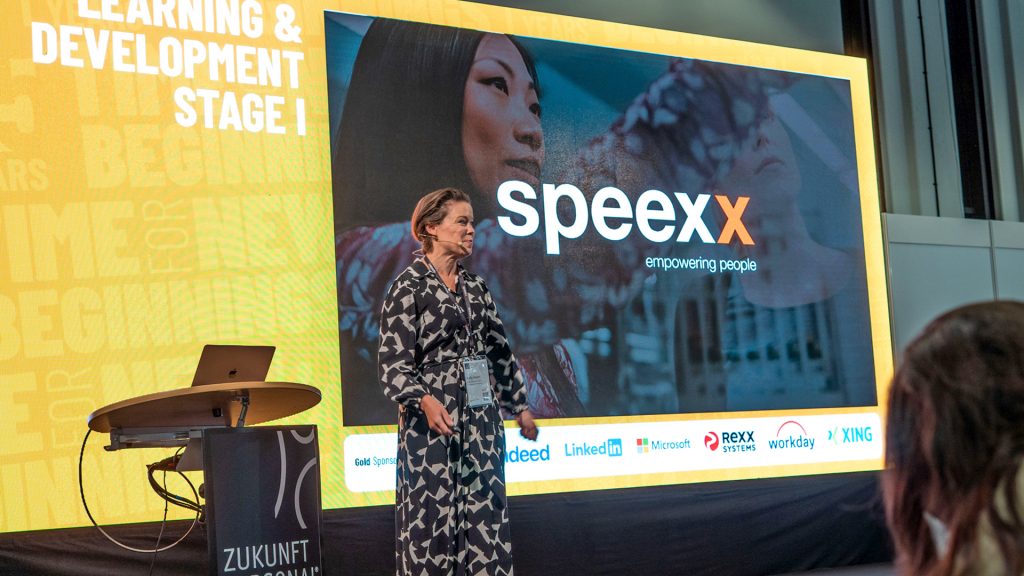
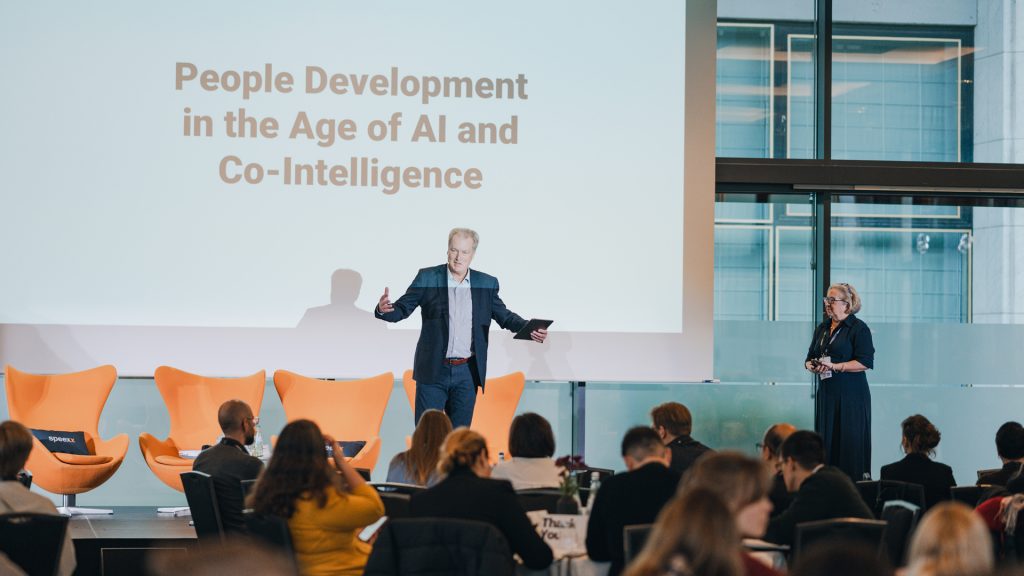
As organizations operate across increasingly complex global environments, the need to develop communication, collaboration, and leadership capabilities at scale continues to grow. In response to this challenge, Speexx has expanded its people development platform with the launch of Intercultural Foundations, a scalable intercultural training program designed to help organizations build cross-cultural competence across their workforce.

This latest development builds on Speexx recognition by World Future Awards, where the company was named Best Integrated People Development Ecosystem, Worldwide in 2026.

Building a Shared Baseline for Cross-Cultural Collaboration

While many organizations invest in leadership development or targeted intercultural training, establishing a consistent foundation across the entire workforce remains a challenge. Intercultural Foundations addresses this gap by creating a shared baseline of cross-cultural understanding, enabling employees to collaborate more effectively across regions, roles, and cultural contexts.

The program combines expert-led live sessions, self-study content, and AI-powered practice to support both structured learning and real-world application. This approach allows organizations to introduce intercultural capability at scale while maintaining flexibility for individual learning paths.

By focusing on practical workplace scenarios such as communication, teamwork, and feedback, the program aligns closely with the realities of global collaboration, where cultural dynamics often influence performance as much as technical skills.

Extending an Integrated People Development Ecosystem

The introduction of Intercultural Foundations further expands the Speexx people development platform, which integrates language training, business coaching, mentoring, intercultural development, and skills development within a single digital environment. Rather than treating these elements as separate initiatives, the platform is designed to support continuous development journeys that reflect how people learn and work in modern organizations.

Within this ecosystem, Intercultural Foundations adds a critical layer—addressing the cultural dimension of collaboration that underpins effective communication and leadership in international environments.

Shaping the Future of Global Work

The evolution of people development is increasingly defined by the ability to combine structure with adaptability—bringing together language, coaching, skills, and cultural understanding into a unified system. Organizations must move beyond fragmented training models toward holistic systems that reflect how work actually happens; otherwise, they risk falling behind in building truly effective global teams.

With the introduction of Intercultural Foundations, Speexx reinforces its role in shaping this transformation, supporting organizations in building workforces that are not only skilled, but capable of collaborating effectively in a complex, interconnected world.

Discover more about Speexx: https://www.speexx.com/

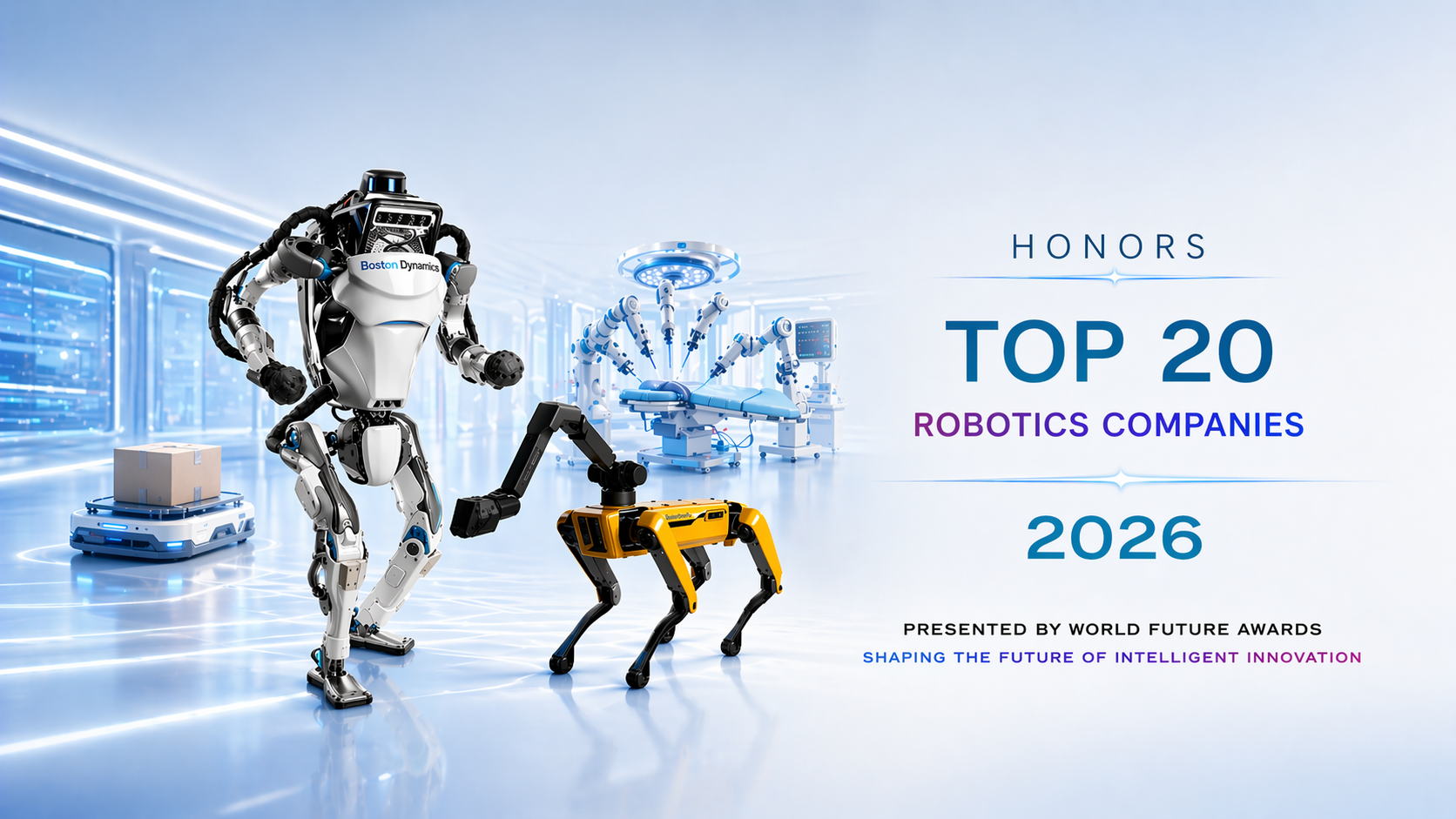
Top 20 Robotics Companies of the World | WFA Global Robotics Research 2026

Why robotics has become one of today’s most strategic industries

Robotics is no longer a narrow factory-automation category. In 2025 and early 2026, it is clearer than ever that robotics is becoming a strategic layer of the modern economy. It now shapes advanced manufacturing, healthcare, logistics, warehouse operations, inspection, mobility, and the broader competitiveness of nations.

This is exactly why World Future Awards prepared its Top 20 Robotics Companies of the World research. The goal is not simply to highlight large names, but to examine the countries, companies, and technology shifts defining the global robotics market today.

The strongest robotics companies are no longer just selling machines. They are building intelligent systems that combine hardware, software, sensing, vision, control, and increasingly AI-enabled capabilities into scalable platforms for the real economy. That shift is what makes robotics one of the most important strategic industries to watch.

As of April 2026, the latest globally audited installation totals published by the International Federation of Robotics still refer to 2024 deployments. For that reason, this updated World Future Awards article combines the newest official global benchmark data released in 2025 and 2026 with 2025 company disclosures and market signals. This provides the freshest reliable picture currently available, without overstating what has and has not yet been officially reported.


The latest official market baseline

The latest official market baseline remains strong. According to IFR’s World Robotics 2025 release, 542,000 industrial robots were installed worldwide in 2024. Annual installations stayed above 500,000 units for the fourth consecutive year, while the global operational stock reached 4.664 million units.

In January 2026, the International Federation of Robotics also said that the market value of industrial robot installations had reached an all-time high of US$16.7 billion. Together, these figures confirm that robotics is operating at true global scale and continues to attract long-term industrial investment.

This matters because the robotics industry is no longer defined only by factory arms and repetitive automation. It now includes collaborative robots, autonomous mobile robots, medical robotics, drones, precision systems, and intelligent service platforms. The market is becoming broader, more software-driven, and more deeply integrated into real-world operations.

Where robotics leadership is concentrated

Robotics leadership is not only about market size. It is also about how deeply automation is embedded into a country’s industrial base.

According to the IFR April 2026 robot density update, Western Europe reached 267 robots per 10,000 manufacturing employees in 2024, ahead of North America at 204 and Asia at 131. At country level, South Korea remains the global benchmark for automation intensity with 1,220 robots per 10,000 employees. Singapore follows with 818, Germany with 449, and Japan with 446. The United States ranks eighth worldwide with 307.

These numbers are important because they show that robotics leadership is not just about buying robots. It is about embedding robotics deeply into industrial systems, productivity models, and national competitiveness.

China: the scale leader

China remains the scale leader in the global robotics market. IFR says that 295,000 industrial robots were installed in China in 2024, representing 54% of all global deployments. The country’s operational stock exceeded 2 million units. That is the clearest signal of where manufacturing-scale automation is happening fastest. IFR also notes that China still has significant room for further adoption and sees potential for robot demand in the country to continue growing by around 10% annually on average through 2028.

Japan: manufacturing depth and robotics production

Japan remains one of the most important robotics countries in the world for a different reason. It combines a large domestic market with deep manufacturing capability and a powerful base of robot producers. IFR continues to describe Japan as the world’s predominant robot manufacturing country. In 2024, Japan installed 44,500 industrial robots and had an operational stock of 450,500 units. IFR expects demand in Japan to grow slightly in 2025 before accelerating again at a medium single-digit pace in the years ahead.

Germany: Europe’s industrial robotics anchor

Germany remains Europe’s industrial robotics anchor. IFR recorded 26,982 robot installations in Germany in 2024, making it the largest robotics market in Europe and the fifth-largest worldwide. Germany also benefits from a strong engineering base, advanced system-integration expertise, and national R&D support. IFR notes that Germany’s High-Tech Strategy 2025 and related robotics research action plan are designed to strengthen research networks, skilled talent, and application-driven robotics innovation.

United States: high-value and frontier robotics

The United States stands out in high-value robotics segments such as surgical robotics, mobile systems, autonomous platforms, AI-enabled robotics, and software-centric deployment. IFR reports that robot density in the United States reached 307 in 2024. The country is also supported by major public research activity through institutions such as the NSFNASA, and the Department of Defense. This helps explain why the U.S. remains especially influential in frontier robotics segments, even though it is not the global leader in manufacturing robot density.

2025 company signals: what robotics scale looks like now

One of the clearest signs of fresh 2025 momentum comes from medical robotics. Intuitive reported preliminary 2025 revenue of approximately US$10.06 billion, up 21% from 2024. The company also reported roughly 3.153 million da Vinci procedures in 2025, an 18% increase year over year, and more than 12,100 systems in its installed base by year-end.

These are not marginal figures. They show that robotics in healthcare is now being deployed at major commercial and clinical scale, supported by recurring procedure growth and an expanding installed base.

Industrial robotics leaders also continue to show major scale in 2025. KUKA’s 2025 annual report describes the group as a global automation corporation with around €3.9 billion in sales and roughly 14,542 employeesFANUC’s Integrated Report 2025 says its ROBOT division recorded sales of ¥329,566 million for the year ended March 31, 2025, accounting for 41.3% of consolidated net sales.

These company signals reinforce a simple point: the global robotics sector is being shaped by a relatively small group of highly scaled companies whose influence extends far beyond individual product launches.

Why these Top 20 companies stand out

The medium-term growth case for robotics remains strong. In March 2026, IFR said that global industrial robot installations are forecast to surpass 700,000 units in 2028, representing a CAGR of about 7% from 2025 to 2028.

This suggests that the next phase of robotics growth will not be driven by one sector alone. It will be supported by a broader convergence of industrial automation, labor constraints, AI-enabled perception, autonomous mobility, and new deployment models across both manufacturing and services.

That is exactly why WFA’s Top 20 Robotics Companies of the World should be read as more than a list of major names. The companies in the accompanying spreadsheet represent different layers of the robotics stack: industrial arms, collaborative robots, autonomous mobile robots, medical platforms, drones, precision automation, and service systems.

Together, they show that robotics leadership today is distributed across multiple segments. The common denominator is the ability to turn intelligent automation into dependable real-world performance.

Conclusion

For World Future Awards, the core conclusion is clear. Robotics is no longer a peripheral technology theme. It is one of the defining strategic industries of the coming era.

China leads in scale. South Korea leads in automation intensity. Japan remains central to robotics manufacturing capability. Germany anchors European industrial robotics. The United States continues to shape high-value and frontier categories.

The companies that matter most are those building complete, intelligent, and deployable systems rather than isolated machines. That is the lens through which the global robotics market should now be understood.

As a companion to this article, we invite our readers to explore the Top 20 Robotics Companies of the World spreadsheet, which offers a curated overview of the companies, countries, and capabilities shaping today’s global robotics landscape.

CountryWhy it matters in roboticsWFA analytical take
🇰🇷 South KoreaAutomation intensity leaderHighest robot density in the world at 1,220 robots per 10,000 manufacturing employees. Strong electronics and automotive demand make it a benchmark for factory automation.
🇨🇳 ChinaScale leaderBy far the world’s largest industrial robot market: 295,045 installations in 2024, 54% of global installations, and roughly 2 million robots in operation.
🇯🇵 JapanManufacturing and robotics supply-chain leaderA top-five robot market and one of the world’s most important robot-manufacturing nations, home to FANUC, Yaskawa, Kawasaki, DENSO, Mitsubishi Electric, and Epson.
🇩🇪 GermanyEurope’s industrial robotics leaderEurope’s largest robot market and third worldwide by robot density at 449. Germany remains a core base for industrial automation, systems engineering, and high-value manufacturing.
🇺🇸 United StatesService, medical, and advanced mobile robotics leaderThe U.S. ranks 8th worldwide in robot density at 307 and is especially strong in surgical robotics, warehouse robotics, field robotics, AI integration, and next-generation humanoids.
🇨🇭 SwitzerlandPrecision automation and robotics championSwitzerland punches above its size with globally important robotics and automation players such as ABB and Stäubli, plus a high-value industrial base.
🇩🇰 DenmarkCobot and AMR innovation clusterDenmark is a global reference point for collaborative robots and autonomous mobile robots, led by Universal Robots and MiR in Odense’s robotics ecosystem
RankCompanySegmentShort overview
1ABB Robotics, SwitzerlandIndustrial, collaborative, and mobile roboticsOne of the world’s leading robotics suppliers, with industrial robots, cobots, AMRs, software, and automation solutions across automotive, electronics, logistics, and general industry.
2FANUC, JapanIndustrial robotics and factory automationA global automation heavyweight with one of the industry’s broadest robot portfolios, spanning compact units, heavy-payload robots, collaborative robots, and paint robots.
3Yaskawa Electric, JapanIndustrial robots and motion controlMaker of the MOTOMAN line and a long-standing leader in industrial robotics, motion control, and factory automation with deep strength in welding, handling, and assembly.
4KUKA, GermanyIndustrial robots, software, intralogisticsA major European automation champion combining industrial robots, systems integration, software, and warehouse automation for manufacturing and intralogistics.
5Kawasaki Robotics, JapanIndustrial, collaborative, and specialized robotsA pioneer of industrial robotics in Japan with solutions spanning welding, handling, palletizing, collaborative robotics, and specialized medical and pharma applications.
6Universal Robots, DenmarkCollaborative robots (cobots)The company that helped define the modern cobot category, with easy-to-deploy collaborative robot arms used widely by manufacturers and SMEs.
7Mobile Industrial Robots (MiR), DenmarkAutonomous mobile robots (AMRs)A leading AMR company focused on internal transport and material handling in factories, warehouses, and healthcare environments.
8OMRON, JapanIndustrial robotics and integrated automationOMRON combines industrial robots, AMRs, machine vision, sensing, and control systems to deliver end-to-end manufacturing automation.
9Mitsubishi Electric, JapanIndustrial robots and factory automationThrough its MELFA robotics portfolio, Mitsubishi Electric serves precision manufacturing, electronics, and automated production environments.
10DENSO WAVE,
Japan
Small industrial robots and automationA strong global player in compact industrial robotics, especially for high-speed, high-precision factory applications including electronics and component assembly.
11Stäubli Robotics, SwitzerlandIndustrial robots for precision environmentsKnown for highly reliable robots used in demanding sectors such as electronics, cleanroom production, pharma, food, and advanced manufacturing.
12Comau, ItalyIndustrial automation and advanced roboticsAn Italian automation leader with strong capabilities in robotics, digital manufacturing, electrification, and flexible industrial systems.
13Intuitive, United StatesSurgical roboticsThe pioneer of robotic-assisted surgery, best known for the da Vinci platform and its leadership in minimally invasive robotic care.
14Boston Dynamics, United StatesHighly mobile and field roboticsA globally recognized robotics company building advanced mobile robots for industrial inspection, logistics, and next-generation humanoid applications.
15DJI, ChinaAerial robotics and intelligent platformsThe world’s most influential commercial drone company, with robotics capabilities spanning aerial imaging, industrial inspection, agriculture, logistics, and autonomous systems.
16SIASUN, ChinaIndustrial, mobile, and service robotsOne of China’s largest robotics companies, covering industrial robots, mobile robots, special robots, and automation solutions for multiple industries.
17ESTUN, ChinaIndustrial robots and motion controlA major Chinese automation and robotics group with strengths in industrial robots, motion control, and production digitalization.
18ECOVACS, ChinaConsumer and service roboticsA global consumer robotics leader best known for robotic floor-care systems, with a large installed base and broad international footprint.
19Doosan Robotics, South KoreaCollaborative robotsOne of the world’s fastest-growing cobot players, strong in high-payload collaborative robots and industrial automation use cases.
20Epson Robots / Seiko Epson, JapanSCARA and precision industrial robotsA long-established robotics business with major strength in SCARA robots and precision automation for electronics, medical, and small-parts manufacturing.

This research reflects WFA’s editorial-analytical review of the global robotics sector, based on official 2025/2026 market releases and the most recent company disclosures available as of April 2026. The accompanying Top 20 Robotics Companies of the World list is designed as a curated industry shortlist rather than a pure revenue ranking.

The Rise of Coordination AI: When Digital Agents Run Crisis Response — and Humans Stay Accountable


By Martha Boeckenfeld, Top 100 Women of the Future | Board Member, Generali Switzerland | Former UBS & AXA Executive | Keynote Speaker on Human-Centric AI

When Seconds Decide

When a wildfire tears through a city at 3 a.m., the difference between survival and catastrophe is no longer defined only by training or equipment. It is increasingly defined by decision speed.

Emergency coordinators must simultaneously deploy dispatch teams, track infrastructure failures, redirect evacuations, and manage a flood of incoming 911 calls. Research shows that in multi-agency scenarios, the lag between an incident occurring and a coordinated response being confirmed can average between 8 and 14 minutes. In the case of a structural collapse or a fast-moving fire, that delay can cost lives.

Agentic AI — systems that do not simply answer questions, but take autonomous, sequential actions — is beginning to change that equation. And it is doing so not only in research environments, but in operational settings today.

From Assistant to Orchestrator

Traditional AI in emergency management has largely played an advisory role: surfacing data, flagging patterns, and suggesting options. A human still had to interpret the output, make a decision, and relay instructions across multiple teams.

Agentic and multi-agent AI works differently. It acts.

Multiple specialized agents can run simultaneously: one monitors citywide camera feeds, another transcribes 911 calls in real time, a third cross-references logistics and resource availability, while a coordinating agent synthesizes all of this into a recommended response plan that is updated second by second.

Leidos and NVIDIA are already building in this direction. Their C2AI system deploys a network of task-specific agents inside emergency operations centers. When a building partially collapses, a visual alerts agent analyzes camera footage and reports: “A building collapse is happening, with debris scattered around. No visible signs of fire or individuals in distress.” Seconds later, when embers appear in another feed, the EMS planning agent updates its recommendation and presents the incident commander with a revised dispatch plan, asking: “Affirm plan or provide input for revision.”

That single line captures the governance model at the heart of coordination AI: machines move at machine speed, but humans remain responsible for judgment and authorization.

The Scale of What Is Possible

A FEMA-backed simulation found that AI-assisted coordination reduced critical response lag by as much as 40% in complex, multi-agency scenarios. For context, if a major incident currently takes 12 minutes to coordinate, agentic AI could reduce that timeline to closer to 7. Across thousands of incidents each year, the cumulative effect on outcomes — including injuries, fatalities, and infrastructure damage — could be substantial.

The case extends well beyond fires and floods.

A 2026 study published in npj Digital Medicine examined how hospitals struggled during the 2021 Canadian heatwave. Temperatures approached 50°C, roads buckled, ICUs were overwhelmed, and patients died in care facilities. The authors argue that static emergency protocols, designed around historical worst-case assumptions, are no longer sufficient for climate events that now regularly exceed those assumptions. Their conclusion is clear: for hospitals preparing for what is actually coming, agentic AI is no longer a future-facing option, but an emerging operational necessity.

The Problem We Cannot Automate Away

Despite its promise, coordination AI introduces a risk that no algorithm can solve on its own: the erosion of accountability. The faster AI orchestrates, the easier it becomes to assume that the system itself is responsible for the outcome. It is not.

In December 2025, the European Commission’s Science Advice Mechanism reviewed AI in emergency management and found that while the technology’s potential is significant, real-world adoption remains limited. The central unresolved challenge is trust between human responders and AI systems. Responders hesitate to rely on outputs they cannot interpret. Commanders are understandably wary of acting on recommendations they may later be unable to explain.

These are not purely technical issues. They are governance issues. They are leadership issues. And they are cultural issues.

There is also the question of what happens when the agents are wrong. An AI system operating at speed, with broad systems access and persistent memory, can propagate a flawed assumption across an entire response plan before a human notices. Decision trails — auditable logs showing what an agent did, when it did it, and why — are not a bureaucratic formality. They are the mechanism that keeps a human decision-maker genuinely accountable for what occurred.

The Real Breakthrough

The most important breakthrough in coordination AI will not be the agent that runs the fastest or integrates the greatest number of data sources.

It will be the governance frameworks, accountability architectures, and leadership cultures that ensure a human being remains answerable for the outcome.

Technology alone will not save us. We will.

And that means we must be far more deliberate about where machine judgment ends and human judgment begins — before the next crisis arrives, not in the middle of it.

References

  1. FEMA / Leidos operational research on multi-agency response coordination, 2024
  2. Leidos, Agentic AI Aims to Cut Down Emergency Response Time When Disasters Strike, October 2025
  3. FEMA-backed multi-agency simulation data on AI-assisted coordination lag reduction, 2024
  4. Gish & Rapaport, Agentic AI Can Help Hospitals Prepare for Unprecedented Weather, npj Digital Medicine, January 2026
  5. European Commission Science Advice Mechanism, AI in Emergency and Crisis Management, December 2025

Exciting News: Dr. Martha Boeckenfeld Joins the WFA Board

World Future Awards is delighted to announce that Dr. Martha Boeckenfeld has officially joined the WFA Board.

A globally recognized AI and Board advisor, investor, educator, and keynote speaker, Dr. Boeckenfeld is known for helping leaders “master future tech”—with a strong emphasis on human-centric innovation and ethical technology adoption

WFA recognition: Top 30 Tech Voices 2025

We are especially proud that Martha is also a WFA Top 30 Tech Voice of 2025, recognized for her contribution to global tech leadership and future-focused dialogue—at the intersection of Future Tech / Fintech / Ethics, with expertise spanning AI, Web3, and human-centred futures

What she brings to the WFA Board

Across her work, Dr. Boeckenfeld bridges cutting-edge technology with real-world executive transformation, combining strategic advisory with education and community building. Her background includes senior leadership experience in global organizations (including UBS and AXA) and an international profile across future-tech ecosystems. 

Welcome to the Board

We are truly happy to welcome Dr. Martha Boeckenfeld to the World Future Awards Board. Her experience, values, and forward-looking perspective will be highly valuable as WFA continues to spotlight the leaders shaping responsible innovation worldwide.

Most Promising Startup City Hubs 2026

Top 20 Global Winners + Rising Hubs + Sector Champions

This publication presents the results of our Most Promising Startup City Hubs 2026 research — a data-informed, editorially validated ranking designed for founders, investors, and ecosystem leaders. Instead of focusing only on absolute scale (total funding, deal volume, and ecosystem size), the research emphasizes repeatable outcomes and acceleration: which cities consistently produce scaleups and exits, and which are gaining ground fastest as the market shifts toward AI-native products, capital efficiency, and sector specialization. To make the findings easier to use in real decision-making, the results are organized into three groups:

  • Top 20 Global Winners: mature ecosystems with sustained performance across funding, talent density, and late-stage outcomes.
  • Rising Hubs: ecosystems demonstrating outsized momentum relative to their size and historic baseline — often offering a stronger cost-to-velocity advantage.
  • Sector Champions: hubs that lead in key verticals, highlighting where the most concentrated expertise, capital, and customer demand sits by sector.

We undertook this research because founders and investors increasingly make location decisions based on where the strongest signal clusters are forming — for talent, customers, capital, and category leadership. This report is intended to serve as a clear, practical map of those signals in 2026.

Method

How we scored hubs (100 points):

  • Outcomes & scale (35%): exits, scaleups, late-stage strength
  • Momentum (25%): multi-year acceleration
  • Talent & knowledge (20%): technical depth, research pipeline, operator density
  • Capital & market access (20%): funding across stages + proximity to customers

Baseline city benchmarking is aligned with widely-referenced ecosystem indices and reporting; the 2026 editorial lens emphasizes acceleration and sector advantage.

Top 20 Most Promising Startup City Hubs 2026 (Global)

Rank City (Country) Best at Why it’s promising for 2026 Watch-outs
1 San Francisco Bay Area (USA) AI/infra, developer tools, biotech crossover, climate platforms World’s fastest loop between research, capital, talent, and distribution — especially for AI. High burn rates; intense talent competition.
2 New York (USA) Fintech, enterprise SaaS, commerce, health Revenue-first ecosystem where AI is rapidly rewiring finance and regulated industries. Expensive GTM; crowded categories.
3 London (UK) Fintech, enterprise, climate, creative tech Cross-border scaling is baked in: global talent, capital, and customers concentrated in one timezone. Late-stage rounds can be tougher vs US.
4 Los Angeles (USA) Media/creator tools, commerce, mobility-adjacent, health The test lab for consumer attention, culture, and AI media tooling. Fragmented ecosystem; network “distance.”
5 Beijing (China) AI, enterprise, deeptech Policy + capital + market scale tuned for building and scaling deeptech at speed. Geopolitical/export constraints for global expansion.
6 Boston–Cambridge (USA) Biotech, health, climate science, robotics The lab-to-world capital: unmatched science commercialization pipeline. Lab costs; longer product cycles.
7 Shanghai (China) Industrial tech, AI, manufacturing-linked innovation Industrial scale with global ambition, powered by manufacturing adjacency. Market access and cross-border friction.
8 Paris (France) AI, deeptech, enterprise Europe’s momentum story: accelerating ecosystem value and AI/deeptech depth. Scale capital depth vs Bay/NY.
9 Tel Aviv Area (Israel) Cybersecurity, AI security, deeptech Security-first builders with global reach; cyber becomes AI-security in 2026. Geopolitical risk; operational volatility.
10 Bengaluru / Bangalore (India) SaaS, AI product/services, fintech, developer tools India’s scaleup engine with deep engineering density and global SaaS playbooks. Talent retention; early global positioning needed.
11 New Delhi (India) Fintech, commerce, B2B services Big market + improving stage progression: seed → A → B maturity. High signal-to-noise; differentiation required.
12 Singapore (Singapore) Fintech, B2B SaaS, logistics, climate finance Asia’s trusted HQ for cross-border scaling with regulation-as-a-feature. Small domestic market; must scale regionally.
13 Tokyo (Japan) Robotics, industrial tech, enterprise, health Deep engineering and massive customer base: strong corporate adoption potential. Long enterprise sales cycles; partnership-heavy.
14 Berlin (Germany) B2B, fintech, consumer, climate-adjacent Europe’s scrappy international hub with strong founder density and talent pull. Europe “fragmentation tax” on scaling.
15 Seattle (USA) Cloud, developer tools, enterprise, biotech-adjacent Quiet giants and serious engineering: AI + cloud adjacency keeps compounding. Lower visibility; less hype capital.
16 Austin (USA) Enterprise, developer tools, climate, hardware-adjacent A builder-friendly ecosystem that matured into a scale hub. Rising costs; infrastructure pressure.
17 Shenzhen (China) Hardware, IoT, robotics, manufacturing tech Prototype-to-production velocity at global scale. IP strategy + export complexity.
18 Mumbai (India) Fintech, commerce, logistics, media-adjacent Finance + adoption curve: fintech and consumer scale keep compounding. Competitive intensity; execution pressure.
19 Chicago (USA) B2B SaaS, logistics, fintech-adjacent, health Execution-first city with real industry adjacency and durable demand. Harder to attract coastal VC attention.
20 Seoul (South Korea) Consumer tech, gaming, hardware-adjacent AI apps Fast adoption and platform power; strong consumer and hardware adjacency. Need global GTM to avoid local saturation.
1

San Francisco Bay Area (USA)

Best at: AI/infra, developer tools, biotech crossover, climate platforms

Why 2026: World’s fastest loop between research, capital, talent, and distribution — especially for AI.

Watch-outs: High burn rates; intense talent competition.

2

New York (USA)

Best at: Fintech, enterprise SaaS, commerce, health

Why 2026: Revenue-first ecosystem where AI is rapidly rewiring finance and regulated industries.

Watch-outs: Expensive GTM; crowded categories.

3

London (UK)

Best at: Fintech, enterprise, climate, creative tech

Why 2026: Cross-border scaling is baked in: global talent, capital, and customers concentrated in one timezone.

Watch-outs: Late-stage rounds can be tougher vs US.

4

Los Angeles (USA)

Best at: Media/creator tools, commerce, mobility-adjacent, health

Why 2026: The test lab for consumer attention, culture, and AI media tooling.

Watch-outs: Fragmented ecosystem; network “distance.”

5

Beijing (China)

Best at: AI, enterprise, deeptech

Why 2026: Policy + capital + market scale tuned for building and scaling deeptech at speed.

Watch-outs: Geopolitical/export constraints for global expansion.

6

Boston–Cambridge (USA)

Best at: Biotech, health, climate science, robotics

Why 2026: The lab-to-world capital: unmatched science commercialization pipeline.

Watch-outs: Lab costs; longer product cycles.

7

Shanghai (China)

Best at: Industrial tech, AI, manufacturing-linked innovation

Why 2026: Industrial scale with global ambition, powered by manufacturing adjacency.

Watch-outs: Market access and cross-border friction.

8

Paris (France)

Best at: AI, deeptech, enterprise

Why 2026: Europe’s momentum story: accelerating ecosystem value and AI/deeptech depth.

Watch-outs: Scale capital depth vs Bay/NY.

9

Tel Aviv Area (Israel)

Best at: Cybersecurity, AI security, deeptech

Why 2026: Security-first builders with global reach; cyber becomes AI-security in 2026.

Watch-outs: Geopolitical risk; operational volatility.

10

Bengaluru / Bangalore (India)

Best at: SaaS, AI product/services, fintech, developer tools

Why 2026: India’s scaleup engine with deep engineering density and global SaaS playbooks.

Watch-outs: Talent retention; early global positioning needed.

11

New Delhi (India)

Best at: Fintech, commerce, B2B services

Why 2026: Big market + improving stage progression: seed → A → B maturity.

Watch-outs: High signal-to-noise; differentiation required.

12

Singapore (Singapore)

Best at: Fintech, B2B SaaS, logistics, climate finance

Why 2026: Asia’s trusted HQ for cross-border scaling with regulation-as-a-feature.

Watch-outs: Small domestic market; must scale regionally.

13

Tokyo (Japan)

Best at: Robotics, industrial tech, enterprise, health

Why 2026: Deep engineering and massive customer base: strong corporate adoption potential.

Watch-outs: Long enterprise sales cycles; partnership-heavy.

14

Berlin (Germany)

Best at: B2B, fintech, consumer, climate-adjacent

Why 2026: Europe’s scrappy international hub with strong founder density and talent pull.

Watch-outs: Europe “fragmentation tax” on scaling.

15

Seattle (USA)

Best at: Cloud, developer tools, enterprise, biotech-adjacent

Why 2026: Quiet giants and serious engineering: AI + cloud adjacency keeps compounding.

Watch-outs: Lower visibility; less hype capital.

16

Austin (USA)

Best at: Enterprise, developer tools, climate, hardware-adjacent

Why 2026: A builder-friendly ecosystem that matured into a scale hub.

Watch-outs: Rising costs; infrastructure pressure.

17

Shenzhen (China)

Best at: Hardware, IoT, robotics, manufacturing tech

Why 2026: Prototype-to-production velocity at global scale.

Watch-outs: IP strategy + export complexity.

18

Mumbai (India)

Best at: Fintech, commerce, logistics, media-adjacent

Why 2026: Finance + adoption curve: fintech and consumer scale keep compounding.

Watch-outs: Competitive intensity; execution pressure.

19

Chicago (USA)

Best at: B2B SaaS, logistics, fintech-adjacent, health

Why 2026: Execution-first city with real industry adjacency and durable demand.

Watch-outs: Harder to attract coastal VC attention.

20

Seoul (South Korea)

Best at: Consumer tech, gaming, hardware-adjacent AI apps

Why 2026: Fast adoption and platform power; strong consumer and hardware adjacency.

Watch-outs: Need global GTM to avoid local saturation.

Rising Hubs 2026 (Momentum list)

Rising Hubs are the ecosystems sprinting uphill — outperforming relative to size and cost base. These are the cities where founders can often buy more runway and move faster, while still building global companies.

  • Lagos (Nigeria) — Fintech gravity + founder velocity; Africa’s breakout momentum narrative.
  • Istanbul (Türkiye) — Bridge-market scale with rising founder and investor density.
  • Ho Chi Minh City (Vietnam) — Manufacturing adjacency + fast digital economy growth.
  • Mexico City (Mexico) — Regional platform for fintech and commerce scaling.
  • São Paulo (Brazil) — LatAm heavyweight compounding on capital and talent.
  • Johannesburg (South Africa) — Enterprise and fintech-adjacent growth with regional reach.
  • Jakarta (Indonesia) — Market scale + ecosystem consolidation.
  • Kyiv (Ukraine) — Talent density and resilience; globally competitive engineering teams.
  • Vilnius (Lithuania) — CEE momentum with strong fintech and scale-up signals.
  • Zagreb (Croatia) — CEE rising hub spotlight; improving support infrastructure.

Sector Champions 2026

AI & Frontier Software
🏆 Winner: San Francisco Bay Area
🥈 Runners-up: New York; Paris

Climate Tech
🏆 Winner: Boston (with Bay Area as co-leader)
🥈 Runners-up: London; Berlin
⭐ Notable alternative: San Francisco Bay Area (co-leader)

Biotech & Life Sciences
🏆 Winner: Boston–Cambridge
🥈 Runners-up: San Francisco Bay Area; New York

Cybersecurity & AI Security
🏆 Winner: Tel Aviv Area
🥈 Runners-up: San Francisco Bay Area; London

Fintech (Global)
🏆 Winner: New York
🥈 Runners-up: London; Singapore

Cross-Border HQ Hub (Asia)
🏆 Winner: Singapore
🥈 Runner-up: Tokyo
⭐ Notable alternative: Hong Kong

Hardware & Robotics
🏆 Winner: Shenzhen
🥈 Runners-up: Shanghai; Seoul

Creator Economy & Media Tech
🏆 Winner: Los Angeles
🥈 Runners-up: New York; London

Key sources (for transparency)

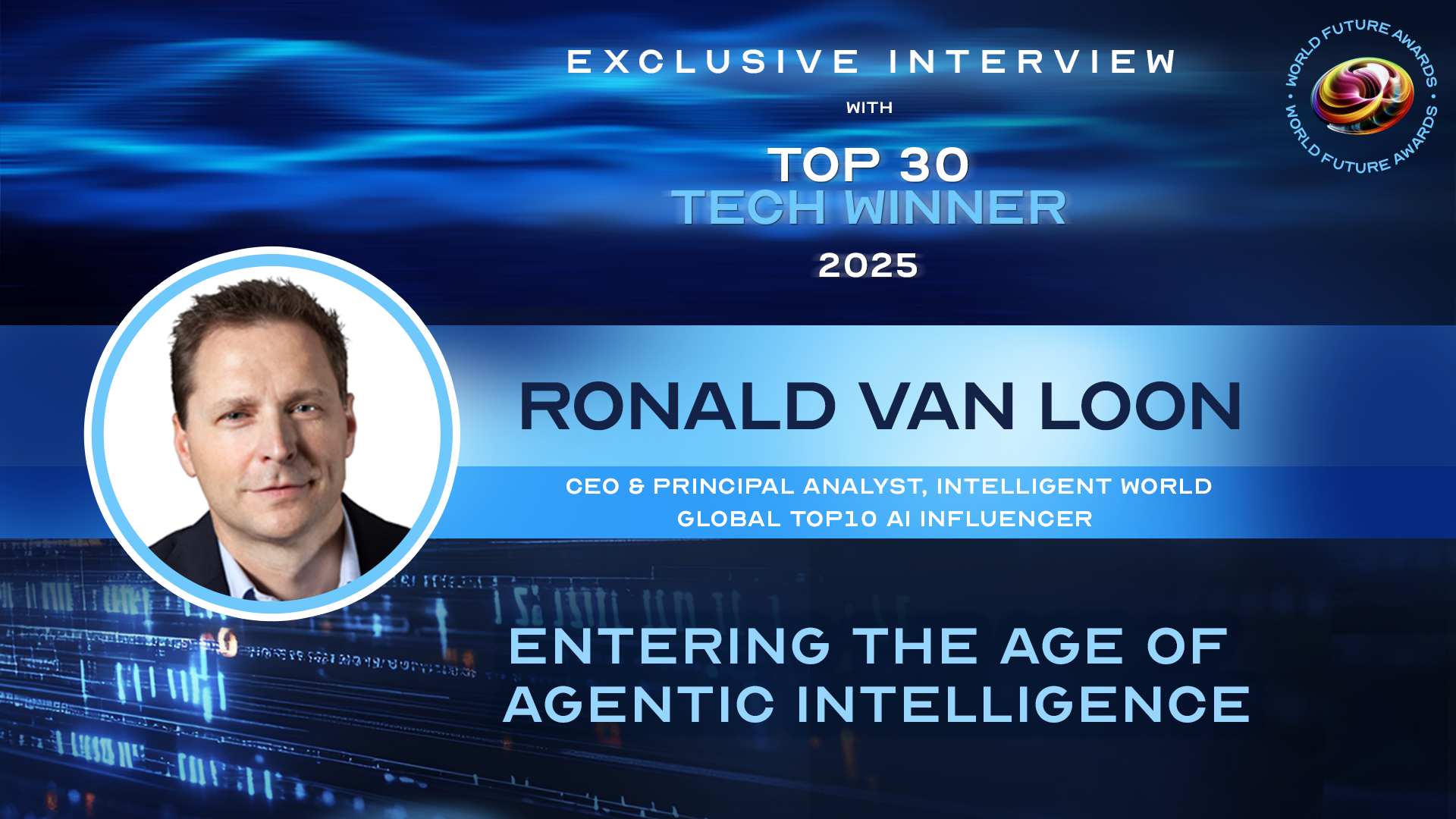
World Future Awards Exclusive: Interview with Ronald van Loon — Top 30 Tech Voices 2025

World Future Awards is proud to present an exclusive conversation with Ronald van Loon, one of the official Top 30 Tech Voices of 2025, recognized for his significant contribution to the evolution of enterprise AI strategy, executive education, and thought leadership at the intersection of GenAI, Agentic AI, and data-driven transformation.

Ronald serves as CEO & Principal Analyst of Intelligent World, a global platform helping business leaders navigate emerging intelligence technologies and make informed AI adoption decisions with both confidence and responsibility. His work spans strategic research, corporate advisory, content leadership, and speaking engagements that have shaped board-level discourse around AI readiness, digital governance, and the future of work.

At a time when enterprises are transitioning from experimentation to autonomous, agent-driven operations, Ronald’s voice stands out for its clarity, pragmatism, and future-oriented vision. As we move into 2026, his insights offer a critical lens into how organizations can harness next-generation AI technologies — not only for efficiency, but for competitive advantage and long-term value creation.

In this interview, we explore Ronald’s perspectives on agentic intelligence, risk frameworks, cross-border regulation, and the human-AI frontier, as well as the skills and leadership mindsets that will define global success in the decade ahead.

Entering the Age of Agentic Intelligence

WFA: As we step into 2026, enterprises are exploring agentic and autonomous AI systems more seriously. What strategic shifts will define this new phase of adoption?

Ronald van Loon: We are moving from an era of experimentation to a fundamental redesign of how organizations make decisions. Agentic AI will not simply support human activity – it will increasingly operate parts of the business autonomously. This requires companies to rethink strategy, governance, and accountability from the ground up.

WFA: Where do you see the strongest real-world use cases emerging first?

Ronald van Loon: The most immediate impact will be in environments that are data-rich, time-sensitive, and decision-intensive – such as cybersecurity, supply chain operations, financial services, and customer engagement.


From Experimentation to Enterprise-Wide Deployment

WFA: What differentiates organizations that successfully scaled AI from those still stuck in pilots?

Ronald van Loon: Successful organizations treat AI as a core business capability rather than an experimental project. They invest early in data quality, governance structures, and leadership alignment.

WFA: What metrics should executives track beyond productivity?

Ronald van Loon: Leaders should focus on decision quality, risk reduction, speed of response, and measurable impact on customer outcomes and revenue growth.


Risk, Governance & Trustworthy Decision-Making

WFA: When AI systems begin making decisions with legal and financial impact, where should responsibility sit?

Ronald van Loon: Responsibility must always remain with humans. While AI can act, recommend, and automate, accountability must be clearly assigned at the executive level.

WFA: How do you see governance frameworks evolving?

Ronald van Loon: Governance is becoming continuous rather than static. Instead of being confined to policy documents, it will operate as a living system that actively monitors models, data integrity, and decision outcomes in real time.


The Global Regulation Landscape

WFA: How can companies stay competitive amid growing AI regulation?

Ronald van Loon: By integrating compliance into their AI design from the outset, rather than treating it as an afterthought.

WFA: Which regulatory approaches are most innovation-friendly today?

Ronald van Loon: Risk-based frameworks that focus on how AI is applied – rather than the technology itself – are the most effective.


People, Skills & AI-Enabled Leadership

WFA: What new leadership competencies are emerging?

Ronald van Loon: Leaders must be AI-literate –  able to ask the right strategic questions while balancing speed, ethics, and accountability.

WFA: How should education and corporate learning evolve? 

Ronald van Loon: Learning must become continuous. The skills required to work with AI will keep changing, and organizations need to change with them.


Business transformation through AI

WFA: Can you share an example where AI transformed a business model?

Ronald van Loon: We are increasingly seeing companies move beyond traditional product sales toward outcome-based models powered by AI. Instead of simply providing tools or services, organizations are using AI-driven analytics, prediction, and automation to deliver measurable business results — such as improved efficiency, reduced risk, or enhanced customer value. For example, in industries like manufacturing, logistics, and financial services, AI is enabling providers to offer performance-based solutions rather than standalone products, creating new recurring revenue streams based on insights and continuous optimization.

WFA: What should late adopters learn from this?

Ronald van Loon: Late adopters should begin with a clear business strategy rather than focusing solely on technology. The key is to define the outcomes they want to achieve — whether that is growth, resilience, or customer impact — and then design their AI approach accordingly. Simply copying others or rushing to implement tools without a structured vision will not create sustainable value. Successful adoption requires alignment between leadership, operations, and long-term objectives.


HUMAN VALUE IN AN AI WORLD

WFA: As AI becomes more autonomous, how is human value shifting?

Ronald van Loon: Human value is shifting toward judgment, creativity, and ethical responsibility — areas where context, values, and accountability matter most and cannot be fully automated.

WFA: What belief about AI will shape this decade?

Ronald van Loon: AI amplifies leadership: strong leaders will scale their impact with AI, while weak leadership will be exposed more quickly.


LOOKING TOWARD 2030

WFA: Define effective AI leadership in one sentence for 2026.

Ronald van Loon: Effective AI leadership means scaling intelligence responsibly while ensuring humans remain accountable for outcomes.

WFA: Beyond AI, what excites you most as we approach 2030?

Ronald van Loon: Beyond AI itself, I am particularly excited about the convergence of AI, digital networks, and national digital sovereignty. This interplay will shape how intelligent systems are built, governed, and secured across regions. I expect to see the emergence of more resilient, locally governed digital ecosystems that balance global innovation with regional values, regulations, and strategic autonomy. This shift has the potential to redefine not only technology, but also economic competitiveness, trust in digital infrastructure, and the way nations collaborate in an increasingly intelligent world.

WFA: Ronald, thank you for sharing your valuable insights with World Future Awards. We appreciate your time, thought leadership, and contribution to advancing responsible and strategic AI adoption. Your perspectives enrich our global community, and we look forward to continuing this important dialogue with you.

NEWSLETTER

Sign up to learn more about our project and to stay up to date.