
15 Drone Companies WFA Is Watching

The global drone industry is no longer defined by hardware alone. Today, the sector represents a convergence of autonomy, software, secure communications, infrastructure intelligence, public safety, emergency response, and sovereign manufacturing. Drones are rapidly evolving into essential tools for governments, enterprises, and critical industries worldwide.

In the United States alone, the FAA projects the commercial drone fleet to exceed one million aircraft in 2025, while remote-pilot certifications continue to expand. This growth reflects how drone technology is moving deeper into regulated, professional, and institutional use cases across infrastructure, logistics, energy, agriculture, mapping, and security operations.

At the same time, the drone market is entering a new era in which trust, compliance, resilience, and supply-chain confidence matter as much as flight performance itself. The Special Competitive Studies Project reported that DJI products still account for approximately 70% to 90% of drones used across U.S. applications, while Reuters noted in January 2026 that Washington withdrew one proposed restriction plan on Chinese-made drones even as separate FCC restrictions on new foreign-made models remained in place.

This dynamic highlights one of the most important strategic questions shaping the future of autonomous systems today: who will define the next generation of trusted aerial systems?

This WFA watchlist is not a ranking. It is a research-led selection of drone companies shaping the future of commercial drones, autonomous systems, public safety, infrastructure intelligence, resilient deployment models, and sovereign technological capability.

1. Skydio 🇺🇸

Skydio stands out as one of the strongest autonomy-first players in the Western market. Its positioning across public safety, inspection, and remote operations — combined with its selection under a NATO procurement framework in 2025 — makes it a key company to watch in the rise of trusted autonomous systems. 

2. Parrot 🇫🇷

Parrot is highly relevant to the European trusted-drone conversation. Its ANAFI USA line is positioned as Blue sUAS-approved and NDAA/TAA-compliant, while the broader Parrot portfolio shows how a European player can compete on secure architecture, public-safety relevance, and sovereign positioning. 

3. Quantum Systems 🇩🇪

Quantum Systems is one of the most interesting European names because it spans both geospatial and security-oriented aerial intelligence. Its Trinity Pro platform targets professional surveying and mapping, while Vector AI reflects the company’s wider ambition in automated aerial intelligence and resilient field deployment. 

4. Delair 🇫🇷

Delair deserves attention for its focus on professional data capture, digital twins, infrastructure monitoring, corridor mapping, and security applications. It represents the industrial face of the drone sector: less consumer-facing, but deeply relevant to infrastructure intelligence, asset management, and resilient operations. 

5. ACSL 🇯🇵

ACSL is a meaningful sovereign-capability story in Asia. The company emphasizes made-in-Japan drones and secure deployment, and it has highlighted government adoption in Japan as it positions itself around domestic production, economic security, and non-Chinese alternatives. 

6. ideaForge 🇮🇳

ideaForge is one of the clearest companies to watch in India’s rising drone ecosystem. Reuters has described it as a manufacturer of VTOL and fixed-wing hybrid UAVs for security and surveillance, and it sits directly within a broader Indian push to expand domestic drone manufacturing and reduce dependence on imported components. 

7. AeroVironment 🇺🇸

AeroVironment remains one of the most consequential U.S. unmanned-systems companies. The company says it has delivered more than 50,000 autonomous systems into high-intensity operational environments, and its portfolio now spans UAS, counter-UAS, robotics, and mission systems — making it central to any serious conversation about resilient aerial capability. 

8. Shield AI 🇺🇸

Shield AI is especially important because it combines aerial platforms with autonomy software. Its V-BAT is positioned for GNSS-denied and communications-contested environments, and the company has recently highlighted operational progress with the Royal Netherlands Navy — a useful signal of how trusted autonomy is moving from concept to fielded capability. 

9. Anduril Industries 🇺🇸

Anduril is not simply building drones; it is building networked autonomous systems. With products spanning counter-UAS, autonomous air vehicles, and software-defined defense architecture, the company is helping define how aerial systems will be integrated into broader sensing, command, and protection ecosystems. 

10. General Atomics Aeronautical Systems 🇺🇸

General Atomics remains a benchmark in the long-endurance category. The MQ-9B SkyGuardian is designed for 40+ hours of flight and for safe integration into civil airspace, which makes the company especially relevant to the future overlap between strategic aerial systems, maritime awareness, border security, and civil-authority applications. 

11. Baykar 🇹🇷

Baykar has become one of the world’s most important exporters of large unmanned aircraft. In January 2026, the company said it had export contracts with 36 countries for Bayraktar TB2 and 16 for AKINCI, underscoring its growing influence in sovereign capability, industrial scale, and international market reach. 

12. Teledyne FLIR Defense 🇺🇸 🇨🇦

Teledyne FLIR Defense is a strong name in mission-focused unmanned systems, especially through the SkyRanger R70. The platform is marketed with open architecture, advanced autonomy, AI-enabled capability, and drone-in-a-box concepts that point toward a future of persistent, automated situational awareness for both government and non-military uses. 

13. Skyeton 🇺🇦

Skyeton is one of the clearest examples of a Ukrainian company with both operational credibility and broader dual-use relevance. The company says Raybird offers 28+ hours of endurance and is suitable not only for long-range aerial intelligence, but also for disaster response, humanitarian operations, and other civilian applications where resilient airborne awareness matters.

14. DJI 🇨🇳

DJI remains the most structurally important commercial drone company in the world. Its enterprise business spans public safety, geospatial applications, inspection, agriculture, and industrial operations, making it one of the clearest examples of drones evolving into practical tools for protecting communities, monitoring assets, and improving decision-making in the field.  

15. Autel Robotics 🇨🇳

Autel remains an important company in the global enterprise segment, with solutions positioned around security, inspection, surveying, and mapping. As the market continues to professionalize, Autel is one of the manufacturers worth watching for how Chinese drone makers adapt to a more trust-sensitive, compliance-focused global environment. 

Conclusion

From World Future Award’s perspective, the most important drone companies are no longer defined only by airframes or hardware performance. The future of the drone industry will be shaped by companies building trusted autonomy, secure architectures, infrastructure intelligence, resilient deployment models, and sovereign technological capability.

That is the lens through which the next generation of drone industry leaders should be understood — and the lens through which the future of trusted aerial systems is likely to emerge.
The Global Drone Landscape 2026

Manufacturers, Sovereignty, and the Future of Aerial Systems

Drones have moved far beyond their early identity as niche flying devices. In 2026, they are becoming part of the operating fabric of modern society — used in public safety, inspection, surveying, agriculture, emergency response, industrial monitoring, logistics, and, increasingly, national resilience. What once felt like an emerging product category now looks much more like strategic infrastructure.

A Category Becoming Core Infrastructure

That shift is visible not only in market demand, but in the way governments and institutions now treat the sector. In the United States, the FAA reported more than 966,000 commercial small drones at the end of 2024 and projected that number would rise to about 1.089 million in 2026. The agency also reported 405,682 remote pilot certifications as of December 2024. In Europe, EASA continues to structure civil drone operations through its “open,” “specific,” and “certified” categories — a sign that drones are no longer operating on the margins of aviation, but within an increasingly formal and regulated system.

As adoption deepens, regulation is tightening as well. In February 2026, the FAA said unsafe or unauthorized drone operators could face penalties of up to $75,000 per violation. That is more than a legal detail; it is a marker of how seriously airspace integrity, public safety, and operational trust are now being treated. Drones are no longer seen simply as tools of innovation. They are increasingly understood as systems that must earn confidence from regulators, institutions, and the public.


Beyond Hardware: The New Competitive Layer

What makes the global drone story especially important today is that the market is no longer being defined by hardware alone. Performance still matters, of course, but the next era of leadership will be shaped just as much by autonomy, software, cybersecurity, trusted architectures, and sovereign manufacturing. In other words, the real competitive question is no longer only who can build a drone, but who can build a drone ecosystem that others are willing to depend on.

This is why the current global manufacturer landscape deserves close attention. DJI (China) remains the most structurally important commercial drone company in the world because of its scale, reach, and product breadth across agriculture, energy, mapping, inspection, and public safety. Yet even DJI’s positioning shows where the market is heading: trust has become central. Privacy controls, security assurances, and data-handling practices are no longer side notes in enterprise communications. They are now part of the value proposition itself.

In the Western ecosystem,Skydio (United States) stands out as one of the clearest autonomy-first companies. Its strength lies not only in aircraft design, but in the software layer around real operational use cases, including Drone as First Responder programs, automated inspection, remote operations, and public-safety workflows. Its 2025 selection under a NATO Support and Procurement Agency framework also strengthened its profile beyond domestic enterprise deployment, reinforcing the idea that autonomy-led drone companies are increasingly strategic actors, not just product vendors.

Parrot (France) is another company to watch closely, especially within the growing narrative of trusted European and allied drone capability. Its positioning around ANAFI USA and ANAFI UKR speaks directly to a market that is beginning to separate into different trust tiers as much as different product segments. This is one of the clearest signs of where the industry is heading: buyers are not only comparing flight performance or payload capacity, but also evaluating supply-chain confidence, compliance posture, and geopolitical comfort.


Strategic Systems and the Sovereignty Question

The defense and strategic systems side of the sector is moving just as quickly. AeroVironment, General Atomics, Shield AI, and Baykar each represent a different dimension of this shift: battlefield-scale deployment, long-endurance unmanned aviation, operations in contested environments, and export-driven strategic reach. What matters here is not simply that these companies build advanced systems. It is that they are helping redefine how drones fit into modern security architectures — as persistent, intelligent, and operationally integrated capabilities rather than isolated platforms.

Shield AI’s positioning is especially instructive because it reflects the industry’s move toward resilience under pressure. Platforms designed for GNSS-denied or communications-contested environments are not just military products; they are signals of where technological expectations are going. Reliability in imperfect, hostile, or degraded conditions is becoming a defining standard for high-value drone systems.

At the same time, the rise of sovereign drone manufacturing is becoming a truly global story. India’s efforts to reduce dependence on imported components, Türkiye’s export momentum through Baykar, and the broader emphasis on domestic capability across multiple regions all point in the same direction. Sovereign manufacturing is no longer a narrow political concept. It is becoming an industrial priority tied to resilience, procurement confidence, and long-term strategic autonomy.


Why Ukraine Matters

For World Future Awards, however, one of the most important chapters in this story is Ukraine. Ukraine should not be treated as a side note in the international drone market. It should be recognized as one of the most dynamic and fast-evolving drone ecosystems in the world. The scale of domestic procurement, the speed of battlefield innovation, and the growing role of local manufacturers all suggest that Ukraine is no longer only responding to necessity — it is actively shaping the future direction of drone development.

That is what makes the Ukrainian ecosystem so strategically significant. Reuters reported in March 2025 that Ukraine planned to procure around 4.5 million FPV drones in 2025 after buying more than 1.5 million in 2024, with 96% sourced from Ukrainian manufacturers and suppliers. At the same time, Brave1 has emerged as an important national defense-tech platform connecting innovators, government, investors, and international partners. Together, these developments point to an ecosystem that is rapidly converting urgency into industrial capability.

What is even more important now is that Ukraine’s drone sector is beginning to attract broader international industrial attention. Reuters reported on March 30, 2026, that Ukrainian companies such as UForce, Wild Hornets, and SkyFall were drawing outside interest as the country explored drone export opportunities. On April 1, 2026, Reuters also reported that Romania and Ukraine were advancing talks on EU-backed joint drone production, with 15 Ukrainian companies involved in the discussions and €200 million in Romanian SAFE-related funding earmarked for joint manufacturing. This is a meaningful signal that Ukraine is increasingly being viewed not only as a wartime innovator, but as a future manufacturing and partnership ecosystem with wider regional relevance.


The Next Decade Will Be Built on Trust

The strategic conclusion is becoming difficult to ignore. The drone sector is entering a new era in which manufacturers will be judged not only by flight performance, but by autonomy, resilience, compliance, software integration, trusted supply chains, and ecosystem relevance. The companies that define the next decade will not simply build drones. They will build aerial systems, operating environments, and industrial capabilities that governments, enterprises, and societies increasingly rely on.

From the WFA perspective, this is exactly why drones deserve much closer attention as a defining technology field of the future. They sit at the intersection of autonomy, real-world utility, resilience, advanced manufacturing, and trusted innovation. As this landscape continues to evolve, World Future Awards will be watching the manufacturers, ecosystems, and breakthrough companies helping shape the future of aerial systems worldwide.

WFA Perspective
At World Future Awards, we do not see drones as a narrow hardware category. We see them as a convergence point for autonomy, real-world utility, resilience, advanced manufacturing, and trusted innovation — a space that will define major industrial and societal capabilities in the years ahead.

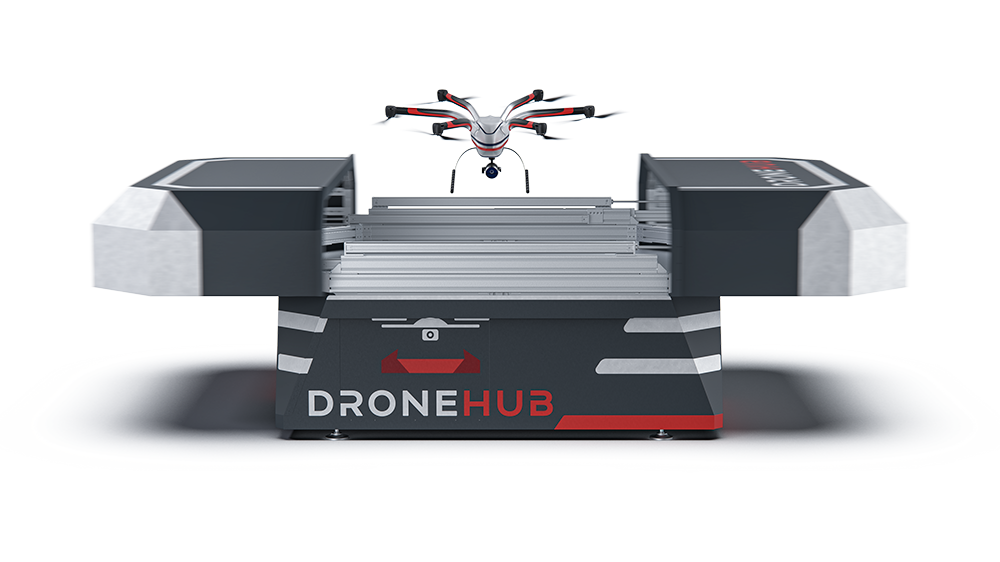
Dronehub Wins World Future Awards for Breakthrough Drone Automated Monitoring Solution

While recognizing the greatness of the human mind, it is impossible to deny the limitations of our physical capabilities when it comes to dealing with big data or the visual monitoring of vast spaces. Advances in technology have made it possible to overcome these limitations, and drones have become one of the most effective tools for efficiently performing data collection and monitoring automation tasks in various fields. The Dronehub team of enthusiasts has created an innovative solution to maximize the effectiveness of drones using artificial intelligence. This unique product was recognized by the World Future Awards research team and was named the winner in the category of Best Drone Automated Monitoring Solutions.

World Future Awards is a global award selecting, recognizing, celebrating, and promoting the best products, software, and services that will transform the global economy and define the landscape of the future. The organization researches inventions across all categories, including technology, beauty, health care, food, home, and entertainment, that are making the world better, smarter or even a bit more fun.


Dronehub offers products that expand the horizons of drone applications in various fields of human activity. The company introduces innovative solutions that significantly simplify labor-intensive tasks and open up new prospects for the effective use of drones in the foreseeable future.


Dronehub is the leader in comprehensive Drone-in-a-box solutions in Europe. The company’s product includes drones, drone infrastructure, and software based on artificial intelligence. The innovative hub ensures the complete autonomy of the drone thanks to a unique docking station that automatically replaces the battery in the drone. The Dronehub solution also takes on the tasks of ensuring the drone takes off and lands, charges its battery, supports climate control to maintain optimal battery health, and protects the drone from theft.

The outstanding technical features of Dronehub products allow drones to be used remotely 24/7 or run on demand, providing full automation of drone services. Such systems can be used for monitoring, inspection, and measurement at industrial sites, as well as in public safety and security services. The technologies used by Dronehub make it possible to speed up monitoring and data analysis in companies with large territories and developed infrastructure by 100 times. Artificial Intelligence super-efficiently processes large amounts of data from the drone and generates a detailed report. The main areas of application of Dronehub solutions are oil and gas, energy market, railway, security, and precision agriculture.

NEWSLETTER

Sign up to learn more about our project and to stay up to date.