

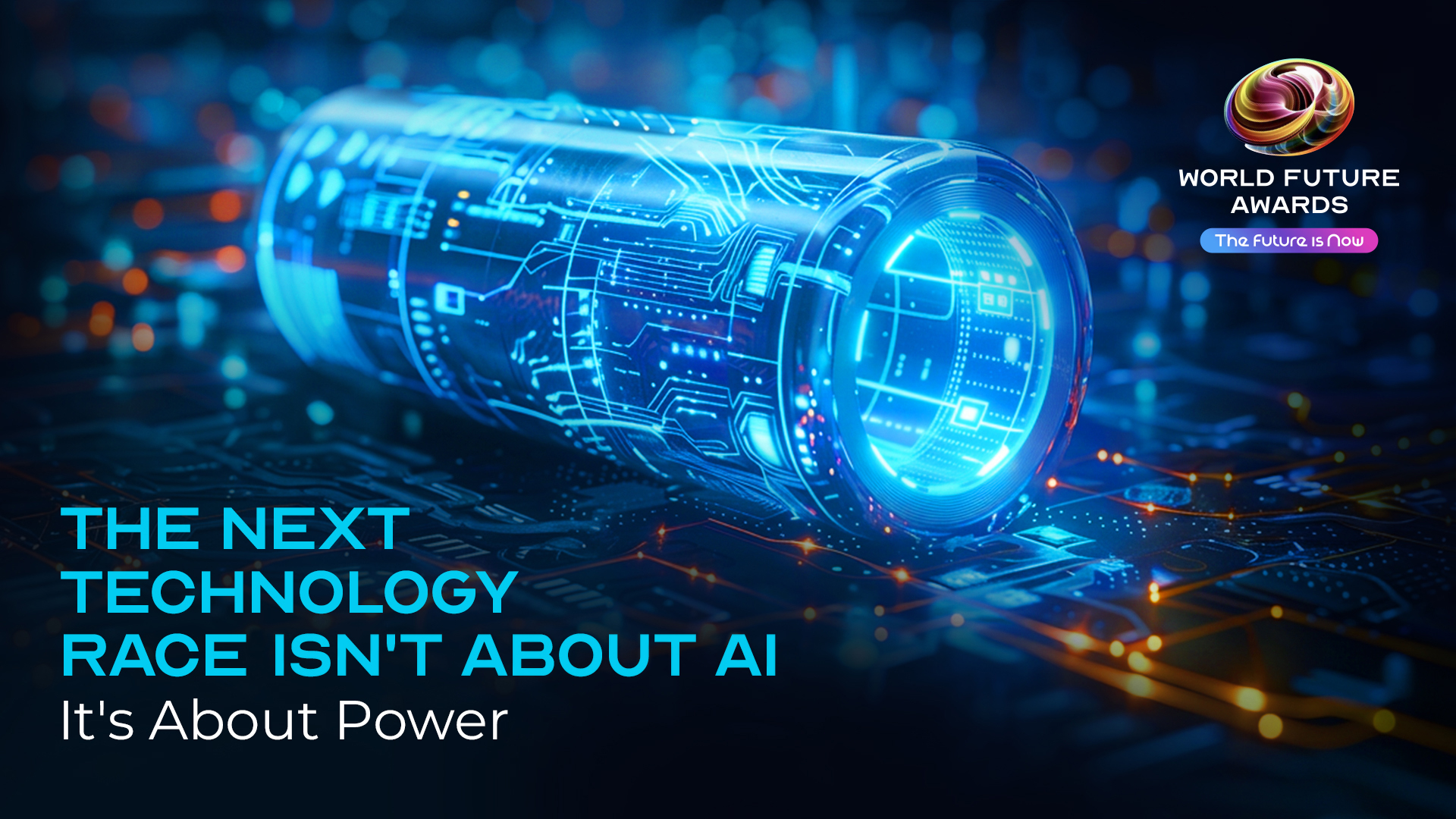
The AI Revolution Has an Energy Problem
The Next Technology Race Isn’t About AI. It’s About Power.
The artificial intelligence race has a new bottleneck, and it isn’t necessarily a better algorithm. It’s electricity.
Technology companies are investing hundreds of billions of dollars in AI infrastructure. But powerful chips and advanced models are only part of the equation. Every new data centre needs reliable power, grid connections, cooling systems and infrastructure that can keep pace with rapidly growing computing demand.
The question is no longer just who can build the smartest AI. It’s who can power it.
The numbers behind the AI boom
According to the International Energy Agency (IEA), global data-centre electricity consumption reached approximately 485 terawatt-hours (TWh) in 2025. Under the IEA’s central scenario, it could nearly double to 950 TWh by 2030. Electricity use by AI-focused data centres is projected to triple over the same period.
The investment behind this expansion is equally striking. Five major technology companies spent more than $400 billion on capital expenditure in 2025, according to the IEA, with spending expected to rise further in 2026.
Yet money alone cannot accelerate every part of the infrastructure. Power generation, grid connections, transformers and permitting processes take time. AI development is advancing at software speed; the energy systems supporting it cannot always move at the same pace.
That mismatch could determine where the next generation of AI infrastructure gets built.
Electricity is becoming a strategic advantage
Data centres are not distributed evenly across the world. They cluster in locations where connectivity, infrastructure, investment conditions and access to electricity make large-scale computing viable.
As demand grows, access to power can influence where technology companies expand, how quickly new facilities become operational and how much it costs to deliver AI services.
The International Energy Agency has highlighted growing bottlenecks across the energy and technology supply chains. In some markets, the challenge is not simply generating enough electricity, but connecting new facilities to the grid and delivering power reliably.
For countries competing to attract technology investment, this creates a new strategic question: is digital ambition matched by physical infrastructure?
A country may have strong research institutions, skilled engineers and supportive innovation policies. But without sufficient grid capacity and a credible plan for future electricity demand, its ability to attract energy-intensive AI infrastructure may be limited.
Can AI growth remain sustainable?
The energy challenge also raises questions about climate commitments, electricity prices and competition for resources.
Renewable energy, nuclear power, battery storage and grid modernisation can all contribute to meeting rising demand. However, adding generation is only part of the solution. Electricity must also be available when and where it is needed, including during periods when wind and solar output fluctuate.
Efficiency matters, too. Better chips, optimised models and more efficient cooling can reduce the energy required for computing. Yet efficiency gains do not automatically lower total consumption if AI adoption and the complexity of workloads grow even faster.
The result is a difficult balancing act: expand AI capabilities while ensuring that the infrastructure behind them remains reliable, affordable and increasingly low-carbon.
The surprising opportunity: AI could help fix the grid
AI is not only adding pressure to energy systems. It could also help modernise them.
Utilities can use AI to forecast demand, detect equipment failures, improve grid management and integrate renewable energy more effectively. Researchers are also exploring its potential to accelerate the development of new materials, batteries and energy technologies.
But these benefits are not guaranteed. They depend on implementation, investment, reliable data and measurable improvements in real-world performance.
The most important question is whether AI can help create a more efficient energy system quickly enough to support its own expansion.
The next race will be won beyond the algorithm
The AI revolution is often described as a contest between models, chips and talent. Increasingly, it is also a contest between infrastructure, energy strategy and the ability to deliver power at scale.
For technology companies, energy availability is becoming a factor in growth and operating costs. For governments, it is part of the broader challenge of economic competitiveness and energy security. For energy providers, AI represents both a new source of demand and an opportunity to modernise the systems on which the digital economy depends.
The winners will not necessarily be those that consume the most electricity or build the largest data centres. They will be the ones that turn energy into a reliable competitive advantage.
The future of AI will be shaped not only by what machines can do, but by whether we can power their potential.
The next technology race isn’t just about AI. It’s about power.
MORE NEWS

TOP 20 FUTURE TECH UNIVERSITIES 2026
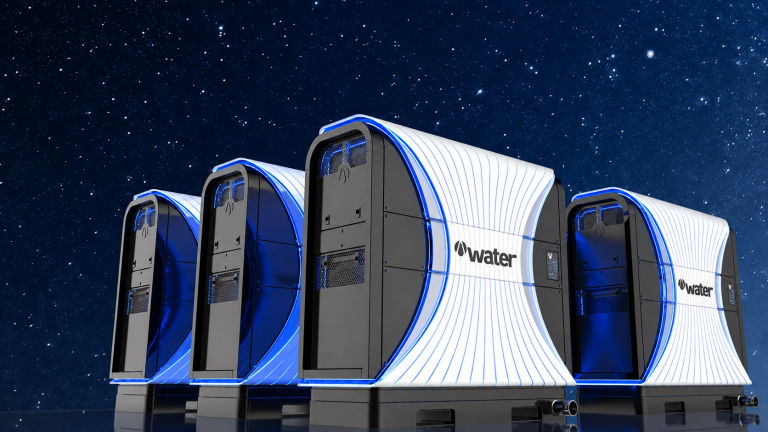
VVater Wins WFA 2026 for Next-Generation Sustainable Water Treatment Technology

VVater: Electrifying the Future of Sustainable Water Treatment
The New Space Race Is Becoming a Technology Race

Top 25 Biotech Breakthroughs Shaping 2026
The Rise of the Physical AI Economy
50 Venture Tech Companies and Leaders to Watch in 2026
NEWSLETTER
Sign up to learn more about our project and to stay up to date.