

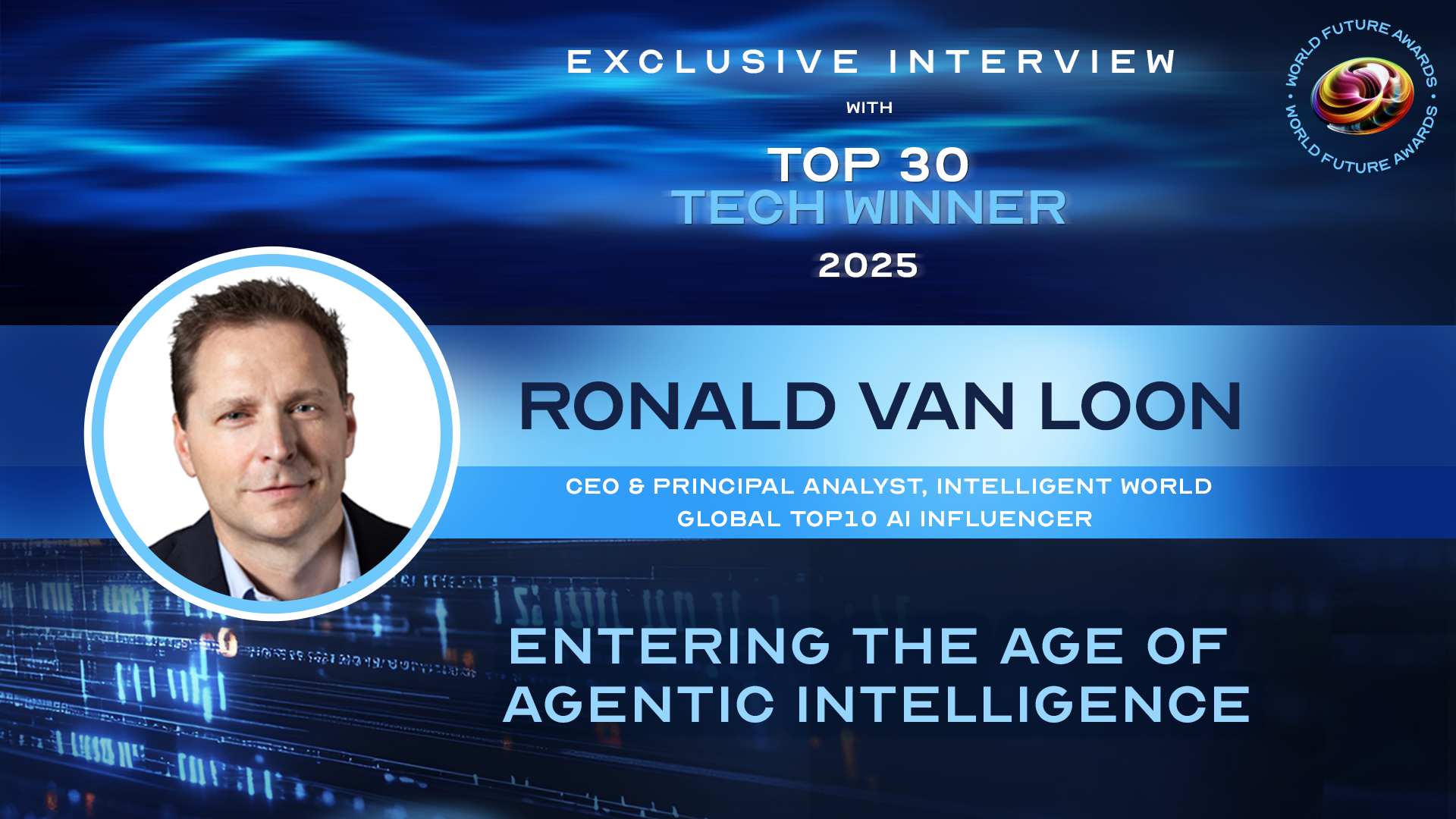
World Future Awards Exclusive: Interview with Ronald van Loon — Top 30 Tech Voices 2025
World Future Awards is proud to present an exclusive conversation with Ronald van Loon, one of the official Top 30 Tech Voices of 2025, recognized for his significant contribution to the evolution of enterprise AI strategy, executive education, and thought leadership at the intersection of GenAI, Agentic AI, and data-driven transformation.
Ronald serves as CEO & Principal Analyst of Intelligent World, a global platform helping business leaders navigate emerging intelligence technologies and make informed AI adoption decisions with both confidence and responsibility. His work spans strategic research, corporate advisory, content leadership, and speaking engagements that have shaped board-level discourse around AI readiness, digital governance, and the future of work.
At a time when enterprises are transitioning from experimentation to autonomous, agent-driven operations, Ronald’s voice stands out for its clarity, pragmatism, and future-oriented vision. As we move into 2026, his insights offer a critical lens into how organizations can harness next-generation AI technologies — not only for efficiency, but for competitive advantage and long-term value creation.
In this interview, we explore Ronald’s perspectives on agentic intelligence, risk frameworks, cross-border regulation, and the human-AI frontier, as well as the skills and leadership mindsets that will define global success in the decade ahead.
Entering the Age of Agentic Intelligence
WFA: As we step into 2026, enterprises are exploring agentic and autonomous AI systems more seriously. What strategic shifts will define this new phase of adoption?
Ronald van Loon: We are moving from an era of experimentation to a fundamental redesign of how organizations make decisions. Agentic AI will not simply support human activity – it will increasingly operate parts of the business autonomously. This requires companies to rethink strategy, governance, and accountability from the ground up.
WFA: Where do you see the strongest real-world use cases emerging first?
Ronald van Loon: The most immediate impact will be in environments that are data-rich, time-sensitive, and decision-intensive – such as cybersecurity, supply chain operations, financial services, and customer engagement.
From Experimentation to Enterprise-Wide Deployment
WFA: What differentiates organizations that successfully scaled AI from those still stuck in pilots?
Ronald van Loon: Successful organizations treat AI as a core business capability rather than an experimental project. They invest early in data quality, governance structures, and leadership alignment.
WFA: What metrics should executives track beyond productivity?
Ronald van Loon: Leaders should focus on decision quality, risk reduction, speed of response, and measurable impact on customer outcomes and revenue growth.
Risk, Governance & Trustworthy Decision-Making
WFA: When AI systems begin making decisions with legal and financial impact, where should responsibility sit?
Ronald van Loon: Responsibility must always remain with humans. While AI can act, recommend, and automate, accountability must be clearly assigned at the executive level.
WFA: How do you see governance frameworks evolving?
Ronald van Loon: Governance is becoming continuous rather than static. Instead of being confined to policy documents, it will operate as a living system that actively monitors models, data integrity, and decision outcomes in real time.
The Global Regulation Landscape
WFA: How can companies stay competitive amid growing AI regulation?
Ronald van Loon: By integrating compliance into their AI design from the outset, rather than treating it as an afterthought.
WFA: Which regulatory approaches are most innovation-friendly today?
Ronald van Loon: Risk-based frameworks that focus on how AI is applied – rather than the technology itself – are the most effective.
People, Skills & AI-Enabled Leadership
WFA: What new leadership competencies are emerging?
Ronald van Loon: Leaders must be AI-literate – able to ask the right strategic questions while balancing speed, ethics, and accountability.
WFA: How should education and corporate learning evolve?
Ronald van Loon: Learning must become continuous. The skills required to work with AI will keep changing, and organizations need to change with them.
Business transformation through AI
WFA: Can you share an example where AI transformed a business model?
Ronald van Loon: We are increasingly seeing companies move beyond traditional product sales toward outcome-based models powered by AI. Instead of simply providing tools or services, organizations are using AI-driven analytics, prediction, and automation to deliver measurable business results — such as improved efficiency, reduced risk, or enhanced customer value. For example, in industries like manufacturing, logistics, and financial services, AI is enabling providers to offer performance-based solutions rather than standalone products, creating new recurring revenue streams based on insights and continuous optimization.
WFA: What should late adopters learn from this?
Ronald van Loon: Late adopters should begin with a clear business strategy rather than focusing solely on technology. The key is to define the outcomes they want to achieve — whether that is growth, resilience, or customer impact — and then design their AI approach accordingly. Simply copying others or rushing to implement tools without a structured vision will not create sustainable value. Successful adoption requires alignment between leadership, operations, and long-term objectives.
HUMAN VALUE IN AN AI WORLD
WFA: As AI becomes more autonomous, how is human value shifting?
Ronald van Loon: Human value is shifting toward judgment, creativity, and ethical responsibility — areas where context, values, and accountability matter most and cannot be fully automated.
WFA: What belief about AI will shape this decade?
Ronald van Loon: AI amplifies leadership: strong leaders will scale their impact with AI, while weak leadership will be exposed more quickly.
LOOKING TOWARD 2030
WFA: Define effective AI leadership in one sentence for 2026.
Ronald van Loon: Effective AI leadership means scaling intelligence responsibly while ensuring humans remain accountable for outcomes.
WFA: Beyond AI, what excites you most as we approach 2030?
Ronald van Loon: Beyond AI itself, I am particularly excited about the convergence of AI, digital networks, and national digital sovereignty. This interplay will shape how intelligent systems are built, governed, and secured across regions. I expect to see the emergence of more resilient, locally governed digital ecosystems that balance global innovation with regional values, regulations, and strategic autonomy. This shift has the potential to redefine not only technology, but also economic competitiveness, trust in digital infrastructure, and the way nations collaborate in an increasingly intelligent world.
WFA: Ronald, thank you for sharing your valuable insights with World Future Awards. We appreciate your time, thought leadership, and contribution to advancing responsible and strategic AI adoption. Your perspectives enrich our global community, and we look forward to continuing this important dialogue with you.
MORE NEWS
The Rise of Coordination AI: When Digital Agents Run Crisis Response — and Humans Stay Accountable
Exciting News: Dr. Martha Boeckenfeld Joins the WFA Board
Most Promising Startup City Hubs 2026
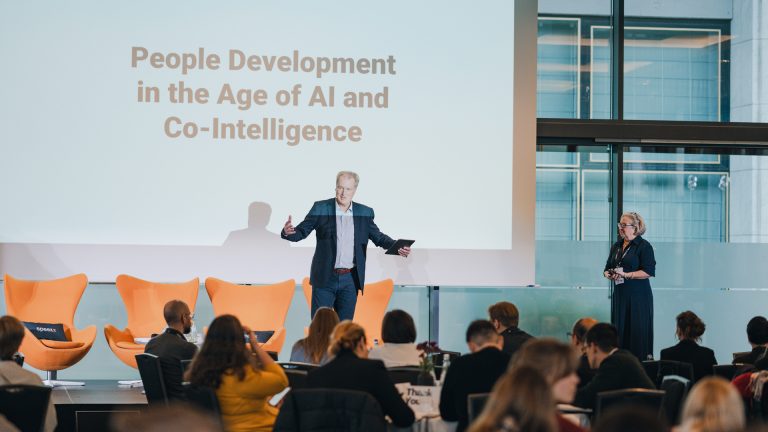
Defining the Next Era of People Development

Speexx Awarded for Global Workforce Development Innovation
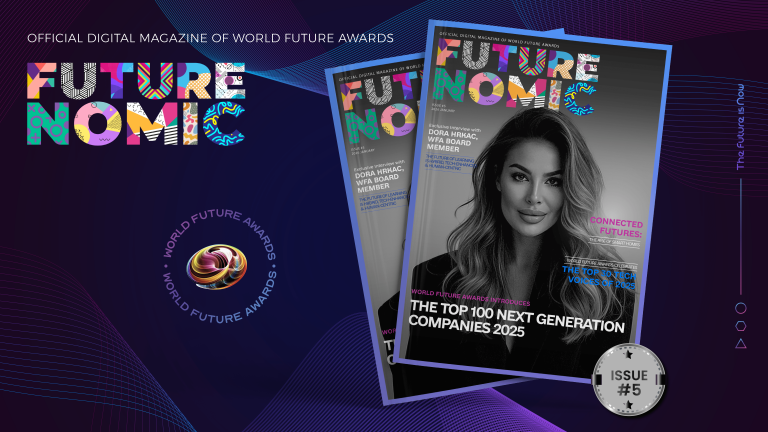
World Future Awards Releases Futurenomics Digital Issue #5

VVater Named One of World Future Awards’ Top 100 Next Generation Companies for 2025
NEWSLETTER
Sign up to learn more about our project and to stay up to date.